Enslaved: Odyssey to the West reimagines Journey to the West
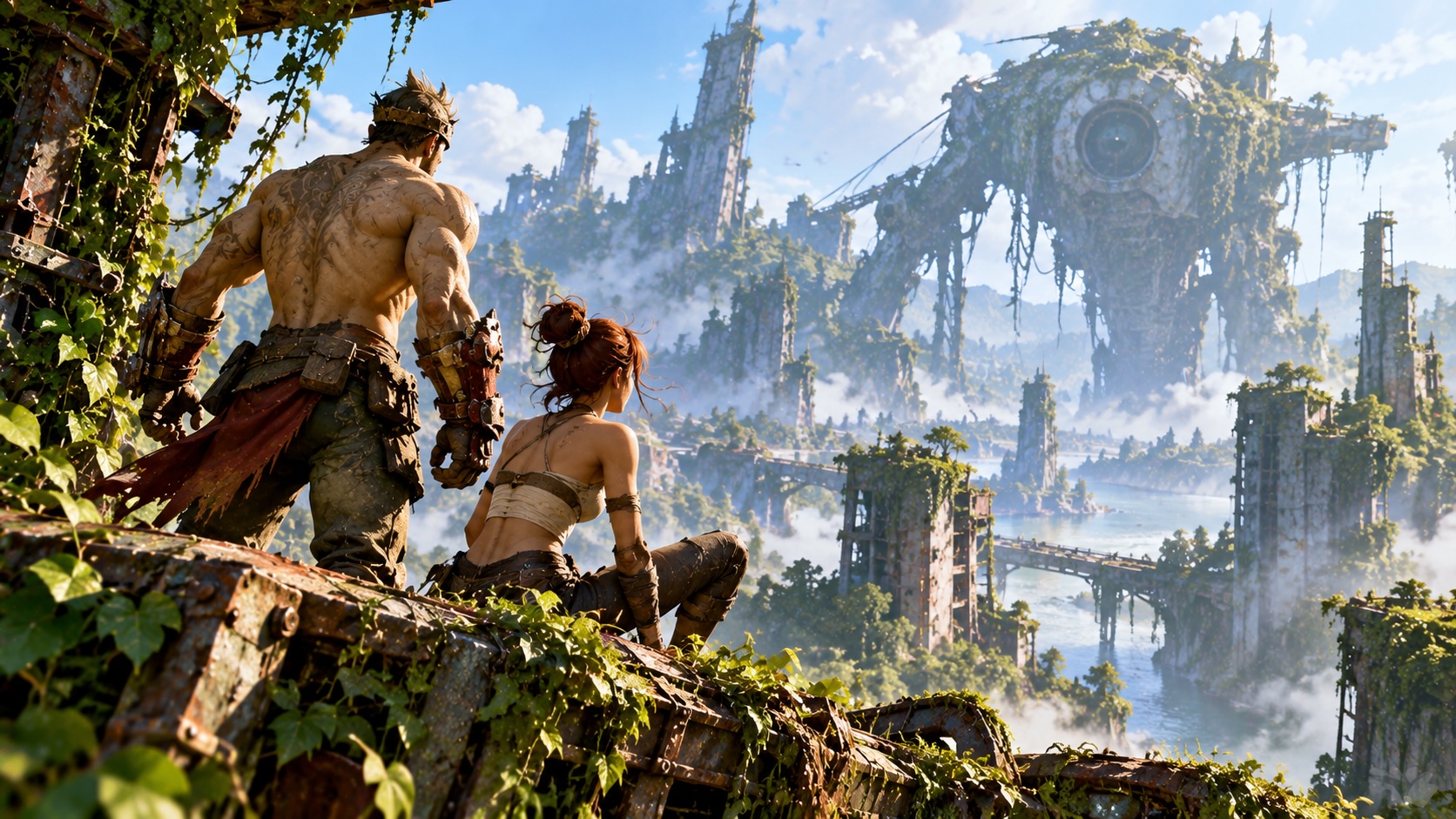
Ninja Theory released Enslaved: Odyssey to the West on Oct. 5, 2010 for PS3 and Xbox 360; the game adapts Journey to the West into a post-apocalyptic U.S. and stars Andy Serkis.
Enslaved: Odyssey to the West was released Oct. 5, 2010 for PlayStation 3 and Xbox 360 by British developer Ninja Theory. The action-adventure adapts the classic Journey to the West into a post-apocalyptic United States and features Andy Serkis as the character Monkey.
The story takes place about 150 years after a global war. Two escaped captives, a strong fighter called Monkey and a young woman named Trip, flee slavers. Trip forces Monkey to accompany her by fitting a slave headband that links their lives. The linked relationship shapes gameplay: Monkey provides combat and movement, while Trip helps solve puzzles and guides progress.
Development began after Ninja Theory decided not to pursue a Heavenly Sword sequel and instead build a more cinematic adventure focused on character interaction. The team drew on the original novel and the 1980s television series Monkey Magic for inspiration and used the 2001 game Ico as a reference for how two characters might rely on each other mechanically.
Screenwriter Alex Garland worked on the script and scene direction to smooth transitions between gameplay and cutscenes. The studio reduced the amount of cinematic footage from roughly two hours to about 70 minutes to limit non-interactive sequences. Performance capture and voice work were used to create actor-driven character interactions; Andy Serkis provided motion capture and voice for Monkey.
Ninja Theory built Enslaved with Unreal Engine 3 rather than its previous in-house engine. The change freed development resources to focus on design, art and mechanics and supported larger, more detailed environments. Artists emphasized bright vegetation reclaiming ruined urban spaces, contrasting natural color with the remaining war machines.
Gameplay combines melee combat-Monkey uses a staff for close and ranged attacks-with platforming, environmental puzzles and sections on a flying device called Cloud. War machines serve as intermittent hazards that can remain dormant before reactivating. The game received an additional story expansion titled Pigsy’s Perfect 10, and a Windows port was released in 2013.
Upon release, critics praised the game’s story, character performances and visual design. Sales fell short of Ninja Theory’s expectations.
Tags
Articles by this author