How League of Legends champions become Riftbound cards
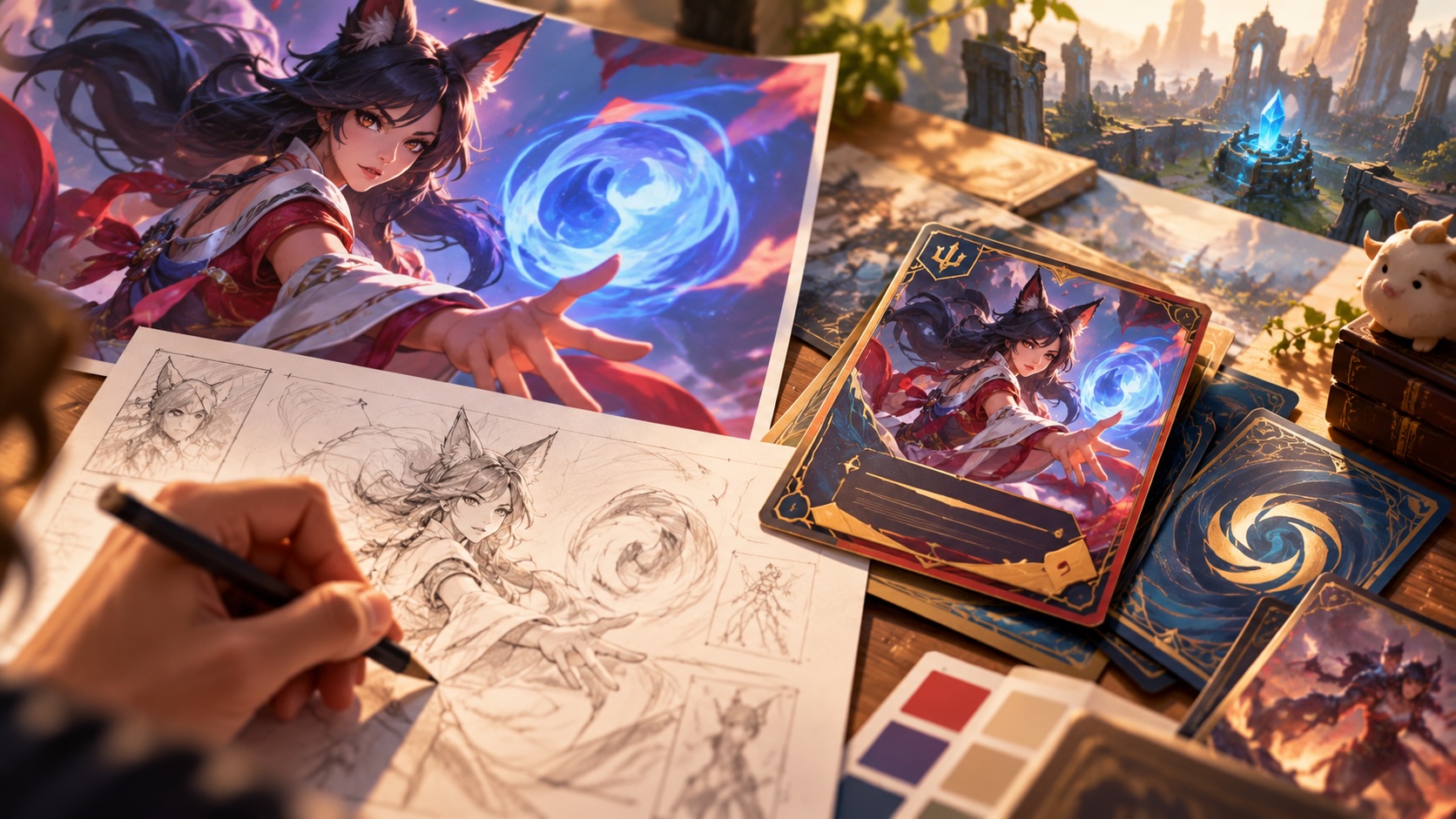
Riftbound designers are turning League of Legends champions into card mechanics by testing how their abilities and themes work in a turn-based game.
Riftbound designers adapt League of Legends champions by identifying the abilities and themes that define each character, then testing different versions in the card game. Dave Guskin, the game and design director, described Darius and Rengar as examples of the process.
The team begins with a champion’s “kit,” the abilities and traits that shape how the character is played in League of Legends. Designers then look for ways to express those qualities across the champion’s full Riftbound deck.
“If you can take that and translate it to some aspect of the way that their ‘kit’ plays in Riftbound, which is of course their whole deck, then I think you can start to get that correspondence,” Guskin said.
The adaptation does not copy every ability. League of Legends is a multiplayer online battle arena built around real-time movement, attacks and cooldowns. Riftbound uses cards, decks and battlefields, so designers must represent those features through turn-based mechanics.
Ezreal provides one example. The champion is known for quick movement and teleportation in League of Legends. The designers considered representing that mobility through fast movement between Riftbound battlefields, then tested whether the mechanic was enjoyable.
“It’s not always going to be an exact translation,” Guskin said. “There’s a lot of testing that happens where we take mechanics we think might work, try to translate them into their card game equivalents, play them, see if they’re fun.”
The team can change an ability when a faithful version creates a frustrating experience for an opponent. For Darius, designers tested versions of his execution ability on a champion unit. A repeatable effect allowed the ability to be used repeatedly and made games frustrating for the opposing player.
The designers placed the execution effect in Darius’ signature spell instead. The change kept the ability tied to the champion while limiting how often it could affect the game.
League of Legends provides balancing tools such as cooldowns and small changes to character statistics. Riftbound designers instead control how often an effect appears, where it is placed and how it works with the rest of a deck.
For Rengar, the team focused on the champion’s hunting behavior and ambushes rather than transferring one specific League of Legends ability. Guskin described the design as creating the expectation that Rengar could appear from concealment and attack.
“It’s rewarding the same thing that Rengar mains would do in League of Legends,” Guskin said.
Tags
Articles by this author