Rockstar tightens mod rules to block unofficial GTA ports
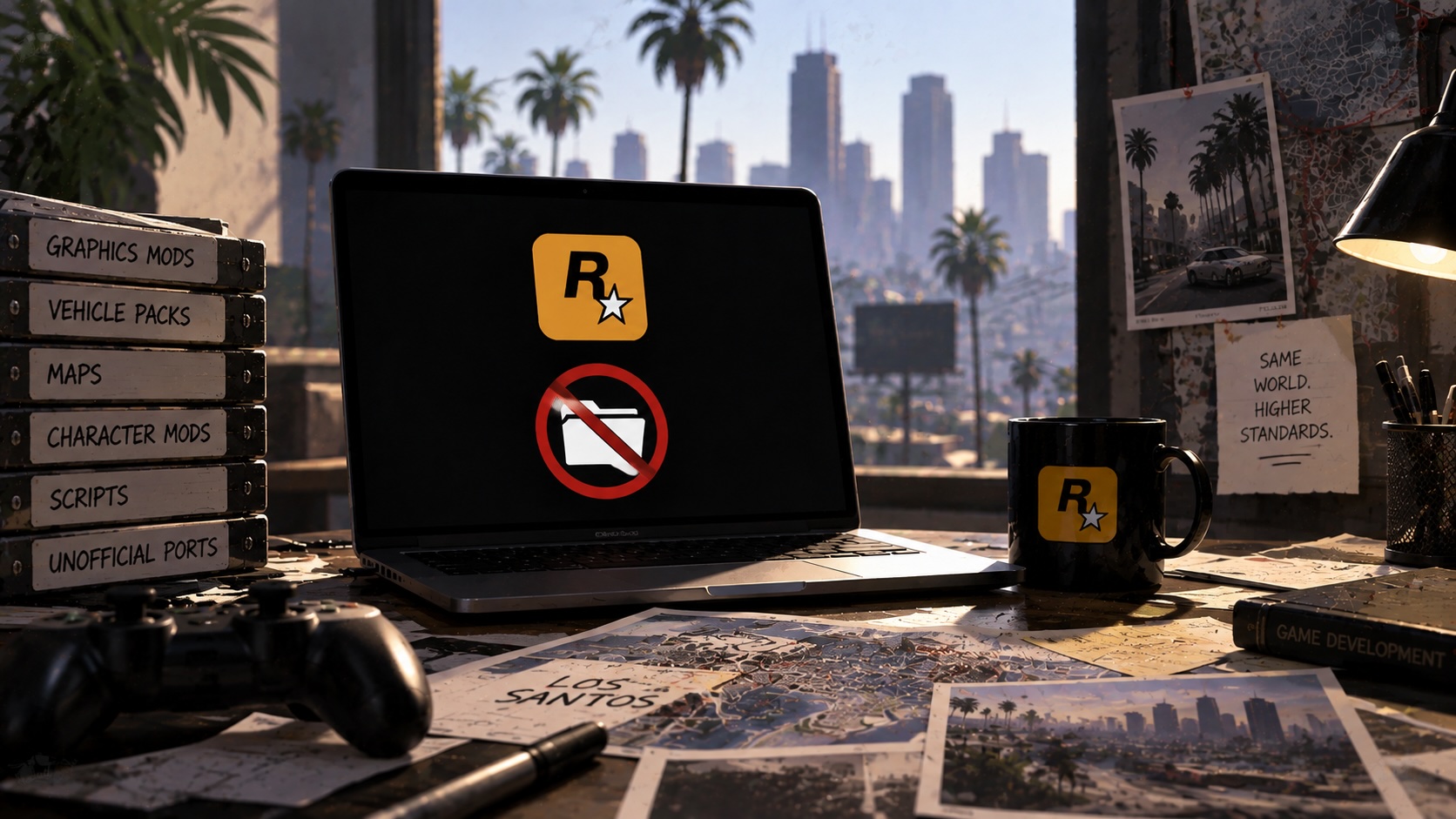
Rockstar Games updated its modding policy to ban mods that recreate or distribute full Grand Theft Auto game builds for unsupported platforms.
Rockstar Games updated its modding guidelines to restrict unofficial ports and full-game redistributions of Grand Theft Auto. The revision clarifies which fan projects are allowed and which will be treated as unauthorized distribution.
The policy update states that mods must not include or enable distribution of complete game executables or packaged builds that allow Grand Theft Auto titles to run outside official releases. The rules apply to every entry in the Grand Theft Auto series and cover distribution channels used by modders, including file-hosting sites and public code repositories.
Rockstar and parent publisher Take-Two Interactive framed the revised guidance as measures to protect intellectual property and to limit unlicensed versions of their games. The company cited concerns about piracy, platform security and the potential for unofficial ports to affect official product plans and player safety.
The change follows years of community projects that aimed to run older Grand Theft Auto titles on handheld consoles, mobile devices and other hardware. Some projects repackaged large portions of game code or assets, which rights holders regard as unauthorized redistribution. Rights holders have previously taken legal or removal actions against projects they view as infringing; the updated policy makes intent to enforce those boundaries clearer.
Legal advisers say the revision strengthens the publisher’s basis for takedown requests and other enforcement steps. Typical mechanisms include notices to hosting services and direct copyright enforcement. Enforcement is expected to focus on projects that reconstruct executable builds or publicly share original game files rather than smaller mods that alter assets or add features while requiring a user’s own game install.
Members of the modding community and digital preservation advocates expressed concern that the new language could restrict legitimate work such as bug fixes, compatibility patches and preservation of legacy releases. Representatives of several fan groups are seeking clarification from Rockstar and asking for concrete examples and a transparent process for approvals and dispute resolution.
Rockstar has in the past allowed many single-player modifications while taking action to prevent cheating and monetization that affect Grand Theft Auto Online. The updated guidelines formalize boundaries that were sometimes enforced through individual actions rather than a single public policy. Take-Two continues to assert trademarks for the Grand Theft Auto name and logos.
Community members have requested a clear roadmap for obtaining permission for preservation-oriented projects or broader compatibility work. Developers and legal consultants recommend case-by-case guidance and a formal application channel to distinguish preservation and compatibility efforts from projects that reproduce and distribute full-game builds without authorization.
Rockstar has not announced further changes to its general stance on fan content beyond the clarified limits in the modding policy.
Tags
Articles by this author