Future TV accused of copyright claims on Honkai: Star Rail clips
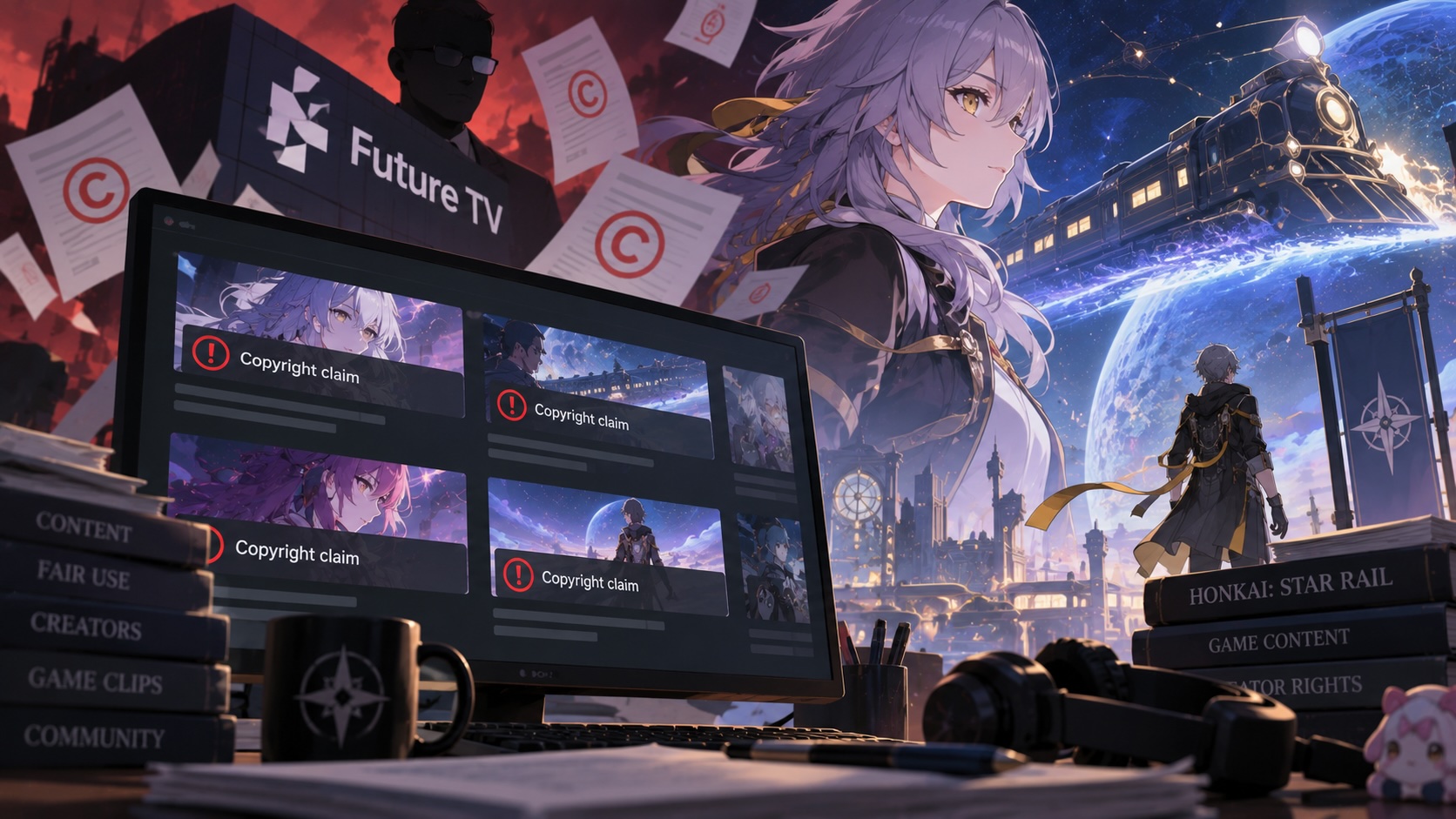
Creators say Future TV filed copyright claims that removed or demonetized Honkai: Star Rail videos and livestream archives on YouTube amid reports a Tencent subsidiary holds a minority stake.
Creators on YouTube reported that Future TV Co., Ltd. was listed as the claimant on multiple copyright notices that led to Honkai: Star Rail gameplay videos and livestream archives being blocked, demonetized or removed. Affected material included live broadcasts, gameplay recordings, promotional viewing archives and short clips showing story quests and character showcases.
Reports came from both Japanese and English-speaking creators. Several streamers reported receiving strikes, demonetizations or takedown notices after uploading videos or saving stream archives. Japanese VTuber NOXY flagged a promotional viewing archive that community members say was blocked.
Community members reviewed corporate filings that show a Tencent-affiliated company holds a minority stake in Future TV. Those records have been cited by viewers and creators in online posts criticizing the claims. One community post read, “Tencent’s obsession with Hoyo is just so weird”; another read, “copyright has become way too overbearing on fun content.”
It is not yet clear whether the notices reflect targeted enforcement by Future TV, automated matches generated by platform tools, or an error in rights management. Creators have asked Future TV, any affiliated companies and platform intermediaries for details about how the claims were triggered and why gameplay content was affected.
YouTube’s Content ID and copyright systems can generate automatic matches, but Future TV and other potential rights holders have not issued public confirmations about the recent notices. HoYoverse properties, including Genshin Impact, have previously been subject to copyright claims and takedowns.
Creators and viewers are awaiting responses from the claimant and the platforms to resolve blocked or removed videos. The incident has prompted discussion in community channels about copyright ownership and the operation of automated enforcement tools.
Articles by this author