


 Boost rating


 In-game currency


 Perplexity
 ChatGPT
 Grok
Grok
 Claude
 Post on Reddit
All Valorant Maps (2026) – Full Map List and Current Map Pool
Valorant maps play a huge role in how every match unfolds. Map layouts define rotations, agent utility usage, and the pacing of rounds in competitive play. Riot Games continues to expand the map roster while rotating the ranked pool to keep gameplay fresh. Understanding the current Valorant maps helps players improve positioning, site control, and map awareness. Many players also focus on climbing the competitive ladder faster, and on the Goranked platform, you can buy Valorant accounts if you want to start playing at a higher rank without grinding from the beginning.
Current Ranked Map Pool
Not every map is available in competitive matches at the same time. Riot rotates the ranked pool to keep the meta fresh and prevent players from needing to master too many layouts simultaneously. The current pool focuses on maps that offer balanced attack and defense opportunities.
Active Ranked Maps
Ascent
Bind
Haven
Lotus
Sunset
Abyss
Corrode
These maps appear in several playlists, including ranked, unrated, and Premier mode. They are also commonly used in professional tournaments. Each map in the current Valorant rotation offers a different style of gameplay:
Because the competitive pool is limited, players often spend most of their time mastering these specific Valorant maps. Learning callouts, angles, and rotation timings on these maps can significantly increase win rates in ranked games.
Full Valorant Map List
Since its release, Riot has gradually expanded the number of maps available in Valorant. Each new location introduces different mechanics, visual themes, and tactical challenges. Some maps remain in the ranked pool while others rotate out, but are still playable in other modes.
Standard Maps
Standard maps are designed for the main plant-and-defuse gameplay mode. These maps are also used in deathmatch and custom games.
Ascent
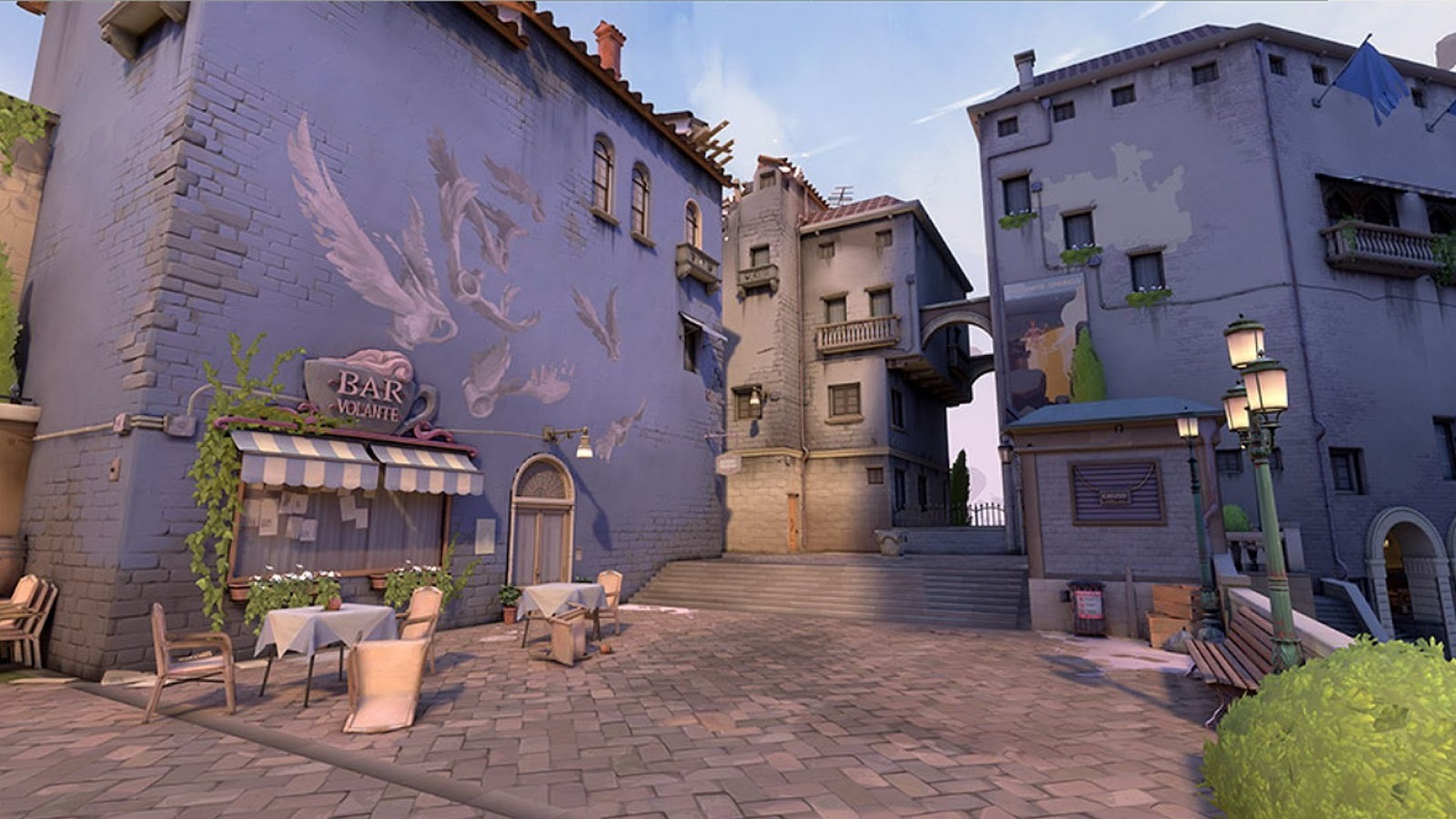
Set in a Mediterranean-style city, Ascent is known for its open middle section. Mid control is essential here, as it allows attackers to split both sites. Mechanical doors can temporarily block entrances, giving defenders more control over rotations.
Bind
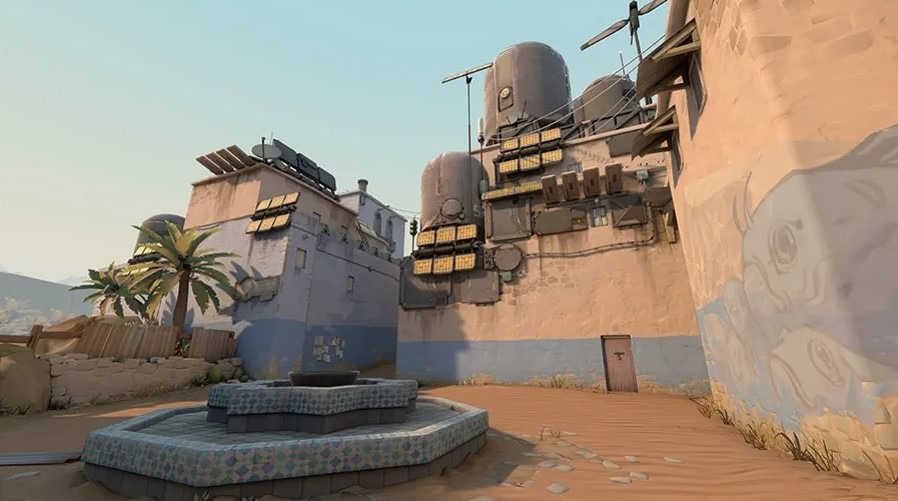
Bind stands out because it has no central lane. Players must choose between two main directions when attacking. Teleporters connect distant areas of the map, allowing unexpected flanks and fast site rotations.
Haven
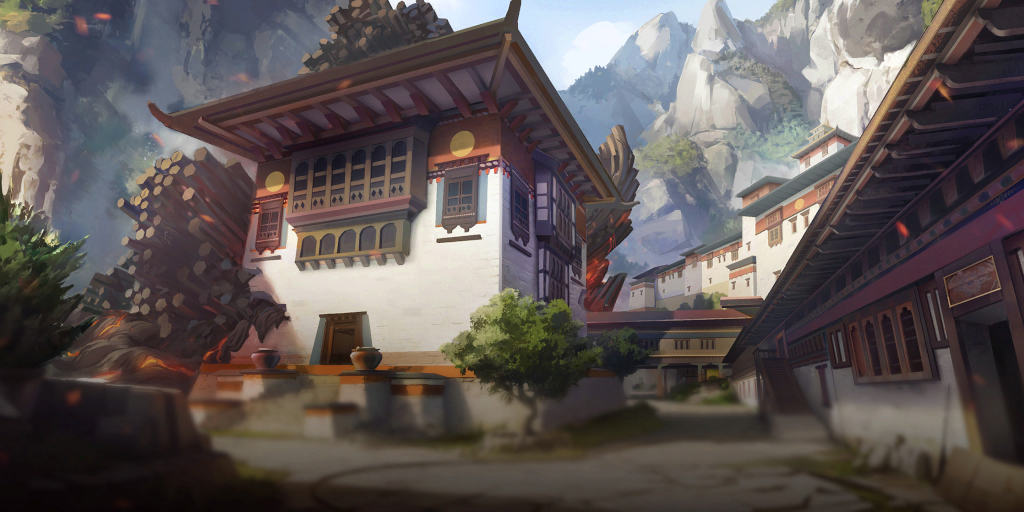
One of the most recognizable maps in Valorant. Haven includes three bomb sites instead of two, which dramatically changes defensive strategies. Teams must constantly gather information to avoid losing control of the map.
Lotus
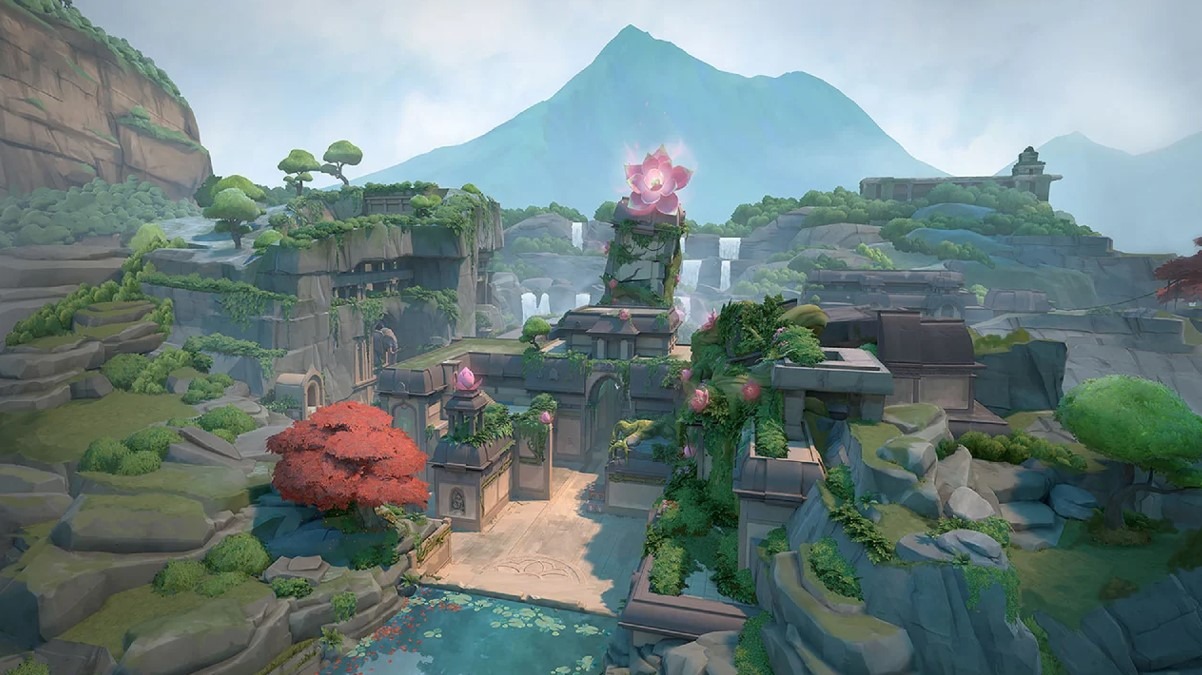
Lotus is another three-site map, but it adds interactive elements like rotating stone doors. These mechanics allow attackers to create new entry routes, making map control and sound cues extremely important.
Sunset
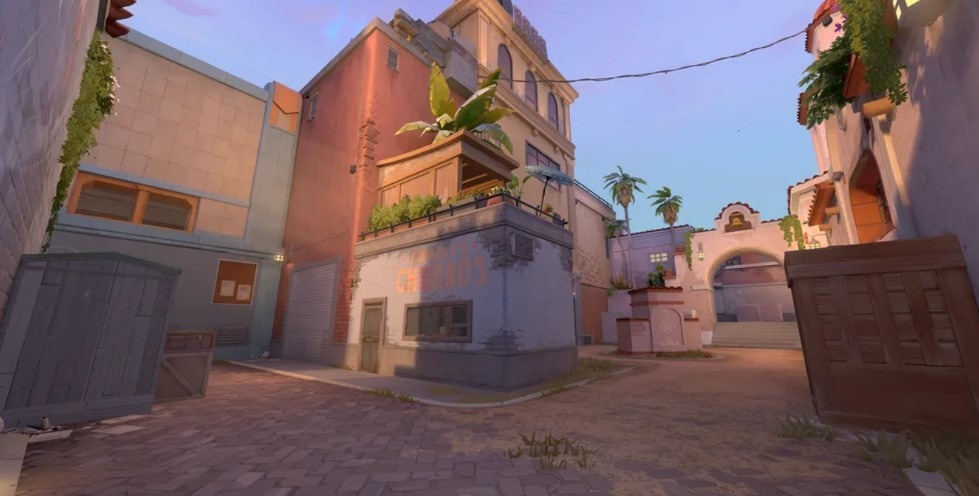
Inspired by Los Angeles architecture, Sunset features a traditional two-site structure. The middle corridor plays a major role in rotations, making it one of the more strategically balanced Valorant maps.
Abyss
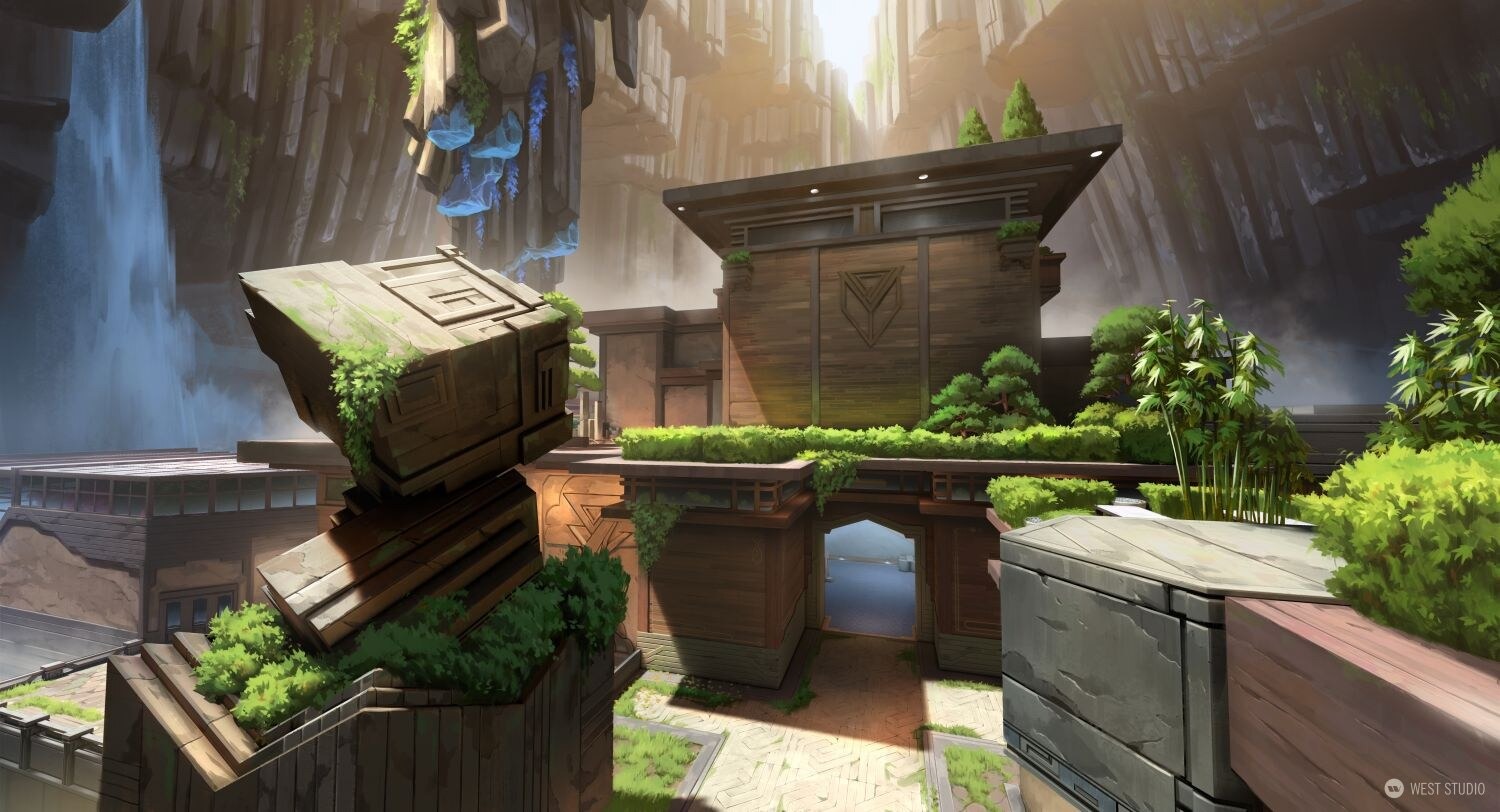
A newer addition to the map pool. Abyss takes place on a floating facility with open edges around the map. Players can fall off if they misposition, which creates unique tactical situations and risky plays.
Corrode
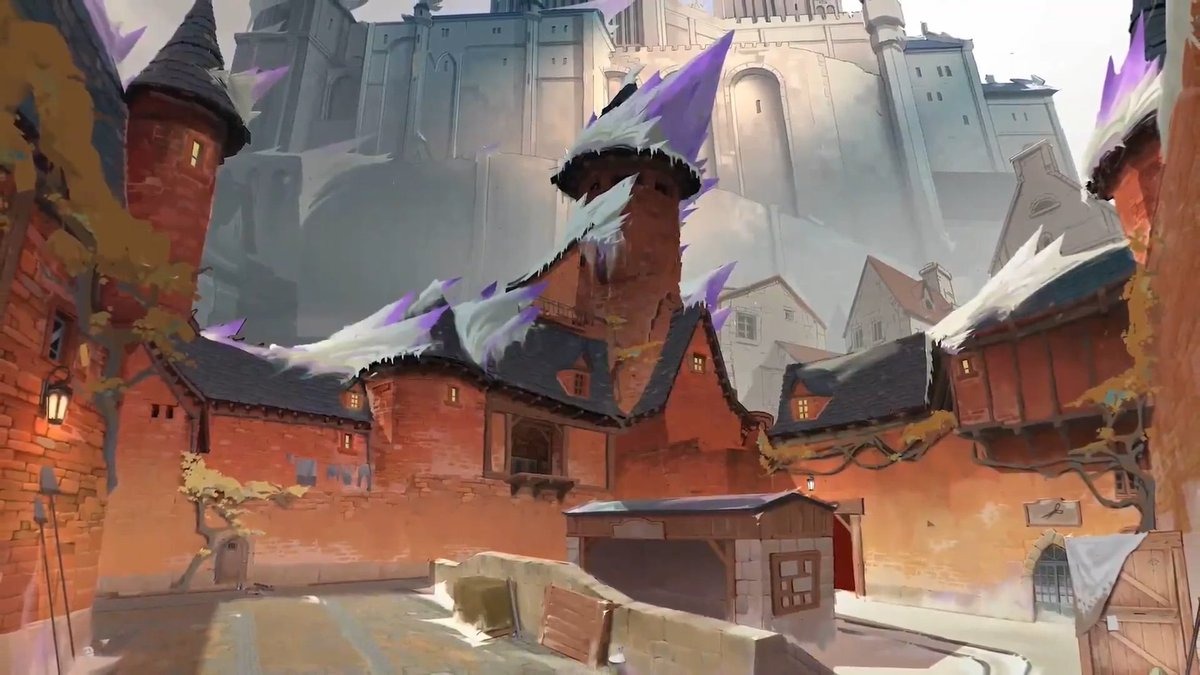
Corrode mixes medieval architecture with industrial elements. Tight hallways lead into larger site areas, creating frequent close-range engagements and fast-paced rounds.
Icebox
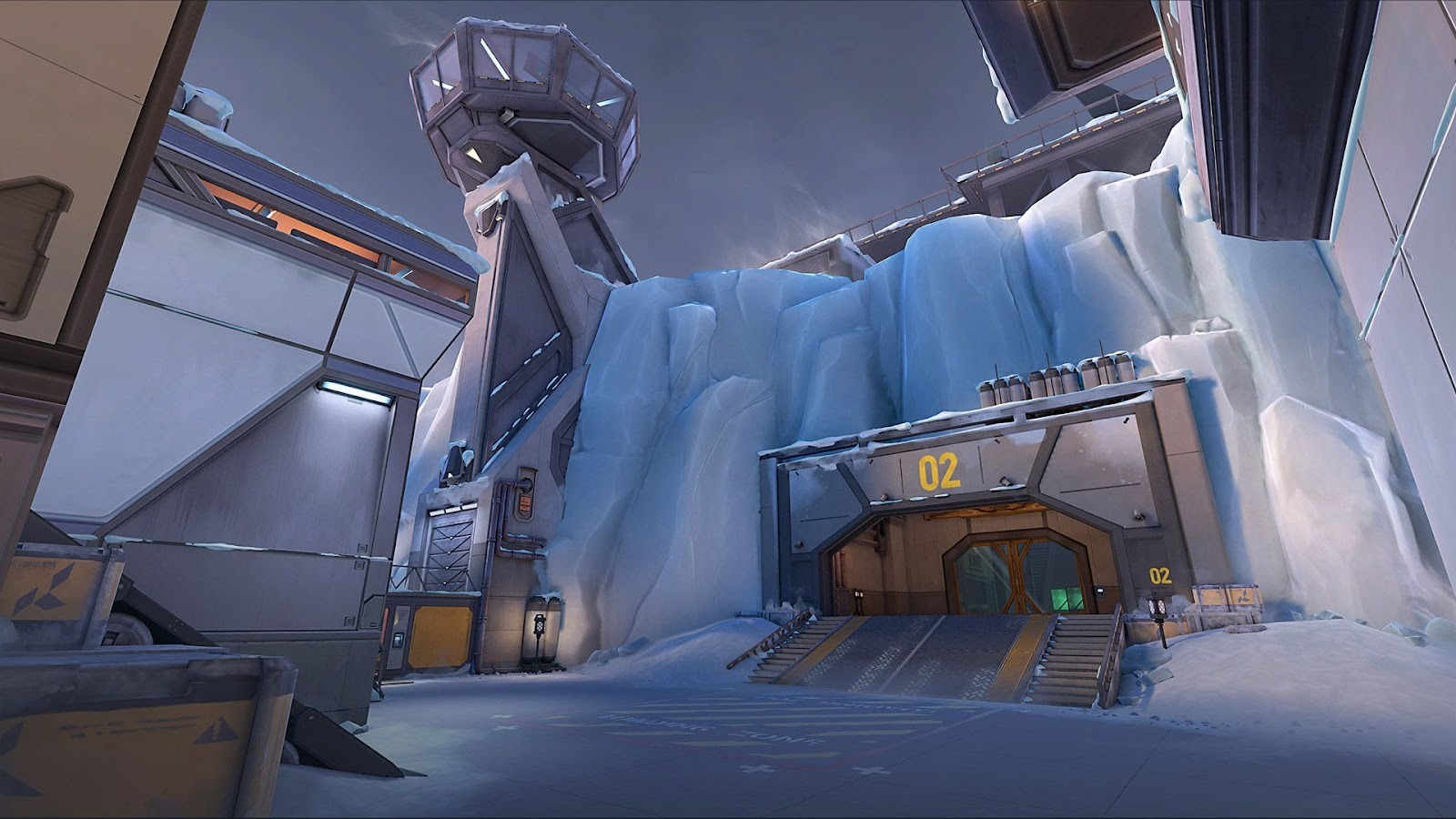
Icebox takes place in an arctic industrial zone. It heavily emphasizes vertical gameplay, with multiple elevated platforms and zipline paths that allow creative movement across the map.
Breeze
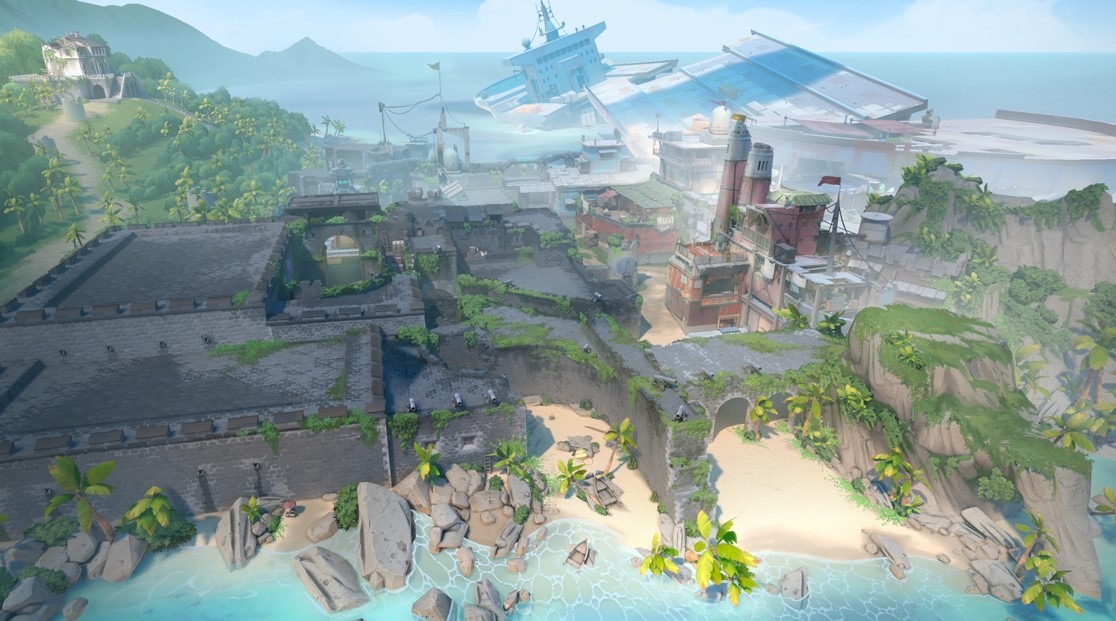
Breeze is one of the largest maps in Valorant. Wide open areas and long sightlines make it favorable for sniper rifles and long-range fights.
Split
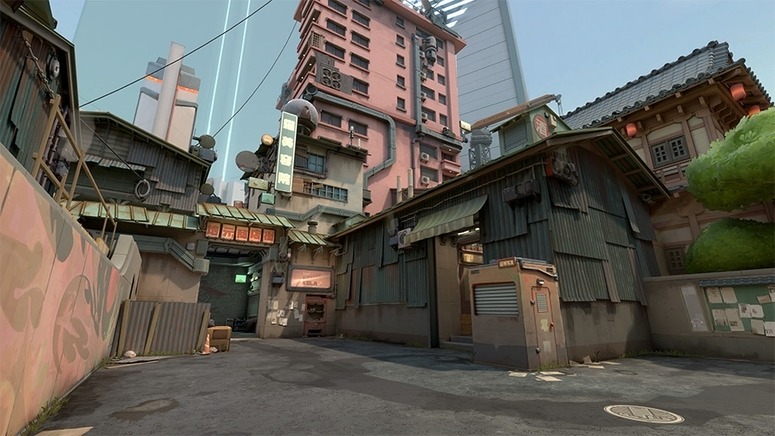
Split is built around vertical gameplay and narrow chokepoints. The central area is elevated, and controlling it often determines which team wins the round.
Fracture
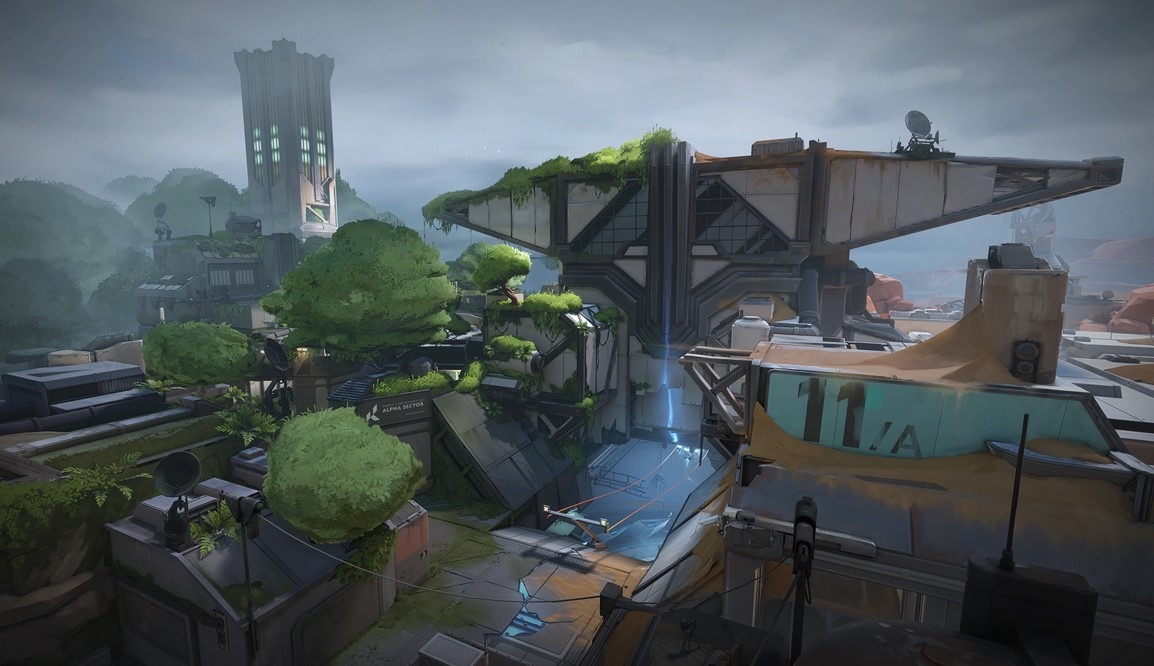
Fracture features one of the most unusual layouts in the game. Attackers spawn on two opposite sides of the map, allowing them to pressure bomb sites from multiple directions simultaneously.
Pearl
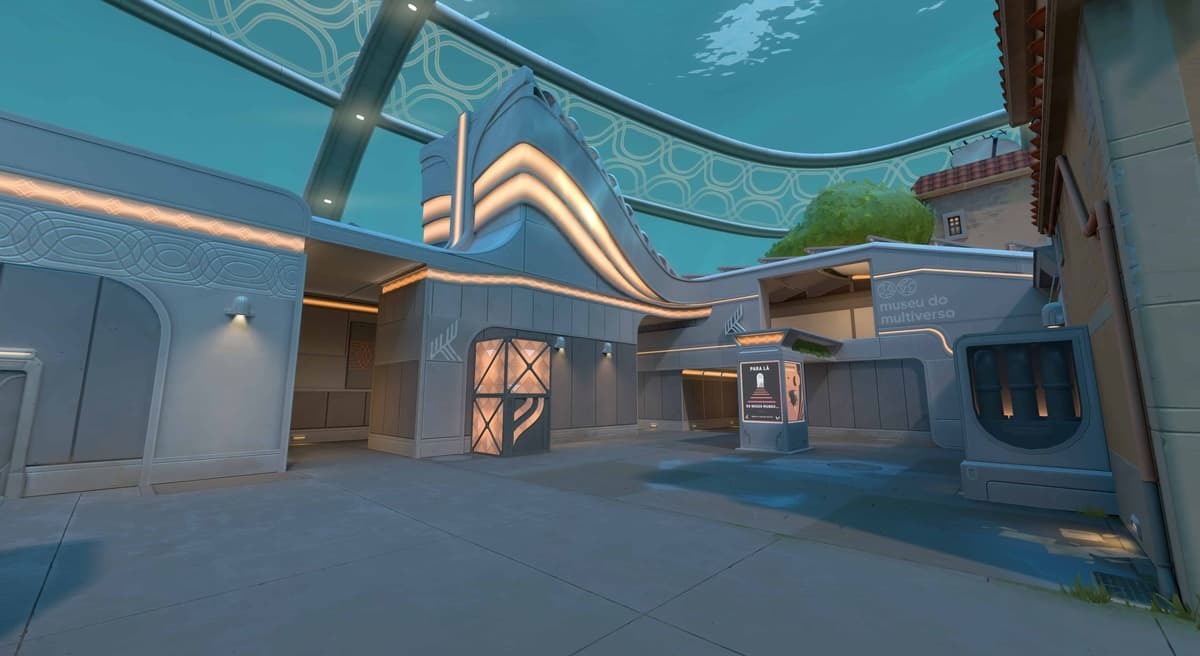
Pearl takes place in an underwater city. The layout focuses heavily on mid control, with long corridors leading into both bomb sites. Compared to other Valorant maps, Pearl has a more straightforward structure without special mechanics.
Team Deathmatch Maps
Team Deathmatch uses a separate set of maps designed specifically for fast respawn combat. Unlike standard Valorant maps, these locations are smaller and built for constant fights rather than tactical spike gameplay. Players spawn near active combat zones, power-up orbs appear across the map, and weapon upgrades allow matches to escalate quickly. TDM maps are mainly used for warm-ups, aim training, and learning gunfights without worrying about rotations or site control. Current Valorant Team Deathmatch maps include:
District: A compact urban environment inspired by the architecture seen in Split. Narrow streets and tight lanes create frequent close-range encounters. The center area often becomes the main fight zone where power-ups appear.
Glitch: A futuristic high-tech map with several elevated platforms. Controlling high ground gives players strong sightlines across the map, making positioning important even in a fast-paced mode.
Drift: Drift features wider lanes and open areas that favor mid-range and long-range duels. The layout encourages players to hold angles and contest central power-up locations.
Piazza: Inspired by European city squares. A circular plaza sits in the middle, with several quick rotation routes around it. Because of the open center, fights usually start immediately after spawning.
Kasbah: Built around North African architecture. Tight corridors and indoor sections lead to chaotic close-range battles. Players often rely on mobility and quick repositioning to survive.
Skirmish Mode Maps
Skirmish mode was introduced as a training environment where players can focus entirely on aim and positioning. These maps are much smaller than traditional Valorant maps and feature mirrored layouts, so both teams fight on equal terrain.
The mode removes several core mechanics. There is no spike to plant, no economy system, and abilities recharge quickly. This creates a pure gunplay environment where players practice crosshair placement and reaction speed. The current Skirmish layouts include:
Skirmish A: A very compact arena focused on direct mid fights. Players often challenge the center immediately, making it ideal for practicing head-to-head duels.
Skirmish B: Slightly wider than the first version. Two main lanes allow players to reposition and control angles instead of constantly fighting in one corridor.
Skirmish C: A more chaotic layout with multiple short routes connecting the map. Flanks happen frequently, which forces players to constantly adjust their positioning.
Maps With Unique Mechanics
Some Valorant maps include special mechanics that change how rounds are played. These features affect rotations, positioning, and the overall strategy teams use during matches.
Valorant Map Layout Types
Even though every map in Valorant has its own visual style and mechanics, many of them follow similar structural concepts. Understanding these layout types helps players learn rotations faster and adapt their strategy depending on the map design.
Three-Site Maps
Three-site maps create more pressure for defenders because they must cover a larger area. This design increases the importance of information gathering and fast rotations. Maps with three sites:
Haven
Lotus
Attackers often fake pressure on one site and quickly rotate to another, forcing defenders to spread their resources.
Mid-Control Maps
Some Valorant maps are heavily built around controlling the middle of the map. Mid control allows attackers to split bomb sites from multiple directions and limits defender rotations.
Maps where mid control is critical:
Ascent
Pearl
Sunset
Teams that dominate mid often gain more flexibility when executing site attacks.
Vertical Maps
Vertical maps add multiple elevation levels, creating additional angles and unexpected fights. Players must constantly check both horizontal and vertical positions. Examples include:
Icebox
Abyss
Fracture
Agents with strong mobility abilities often perform well on these Valorant maps because they can quickly reach elevated positions.
Tips For Learning Valorant Maps Faster
Learning Valorant maps takes time, but focusing on a few key aspects can significantly speed up the process.
Learn common callouts – Knowing map callouts improves team communication and helps coordinate rotations.
Focus on entry routes – Understanding the main attack paths makes site executions easier.
Study popular angles – Many fights in Valorant happen in predictable spots, especially near choke points.
Practice in Deathmatch – Playing Deathmatch helps memorize map geometry while improving aim.
Watch professional matches – Pro players often demonstrate optimal positioning and rotations on different Valorant maps.
Spending time analyzing maps outside of ranked matches can make a noticeable difference in overall performance.
Conclusion
Valorant maps play a central role in shaping how every match unfolds. From classic two-site layouts to unique designs with three bomb sites or interactive mechanics, each map requires its own tactical approach. Riot continues to rotate the competitive map pool and introduce new environments, which keeps the game fresh for both casual and competitive players.
Understanding the layout, mechanics, and strategic flow of different Valorant maps helps players make better decisions during matches. Whether you focus on mastering the ranked pool or exploring the full map list, improving map knowledge is one of the most effective ways to become a stronger Valorant player.
More to read
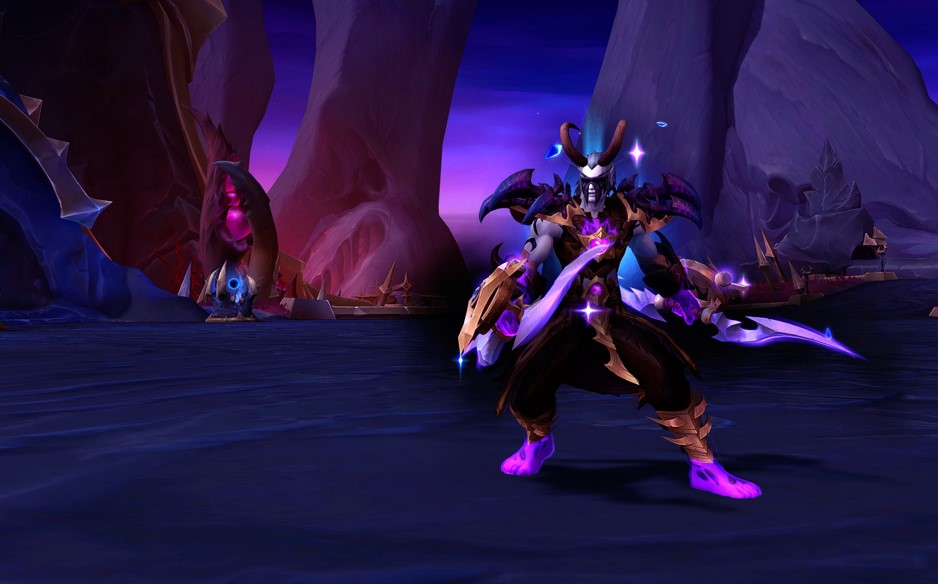


WoW Patch 12.0.5 – Key Features, Class Changes, and What to Expect
WoW Patch 12.0.5 brings Void Assaults, the Voidforge system, class changes, and new activities. Learn how this World of Warcraft update reshapes gearing, gameplay, and the meta.
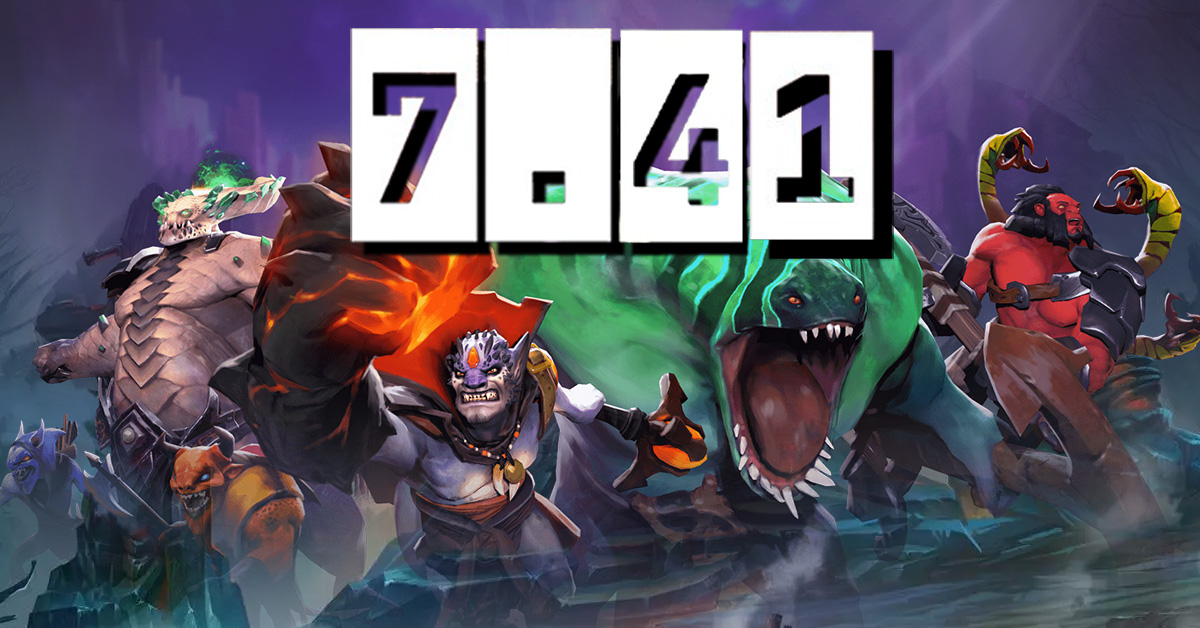

Dota 2 Patch 7.41: Why Valve Removed Aspects and What It Means for the Game
Dota 2 Patch 7.41 removes aspects, reshaping hero balance, drafting, and gameplay flow. Learn what changed, why Valve did it, and how the new Dota 2 meta works.


Fortnite Cheat Codes & Console Commands (2026): What Actually Works
Looking for Fortnite cheat codes in 2026? Learn which codes actually work, how to redeem them, where to find legit Fortnite codes, and how to avoid scams and fake cheats.
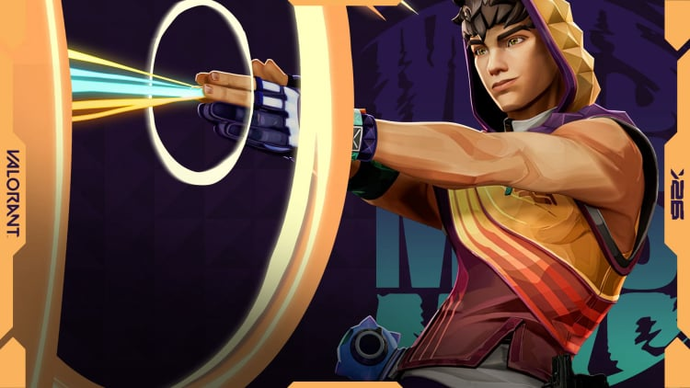

Miks Valorant Guide — All Abilities, Role, Best Teammates, and How To Play
Miks is Valorant's 30th agent and the first Controller who can heal. Here's a full breakdown of every ability, when to use each mode, and how to get the most out of him in ranked.
Dota 2 Patch 7.41 — All New Items, Neutral Items, and Tier List
Patch 7.41 added 9 new shop items and 8 neutral items to Dota 2. Here's what every item does, who should buy it, and which neutral items are actually worth picking up.

Shyvana Rework 2026 — New Abilities, Best Build, Skins, and Meta Impact
Shyvana's VGU finally landed in patch 26.6. New kit, new look, new dragon form that actually feels like a dragon.



Comments on the article
No comments yet. Be the first!
Leave a comment