


 Bewertung-Boost


 Spielwährung


 Perplexity
 ChatGPT
 Grok
Grok
 Claude
 Post on Reddit
Verbessern Sie Ihr Spielerlebnis mit unseren Dienstleistungen
Hol das Beste aus deinem Spiel heraus – mit professionellen Lösungen.
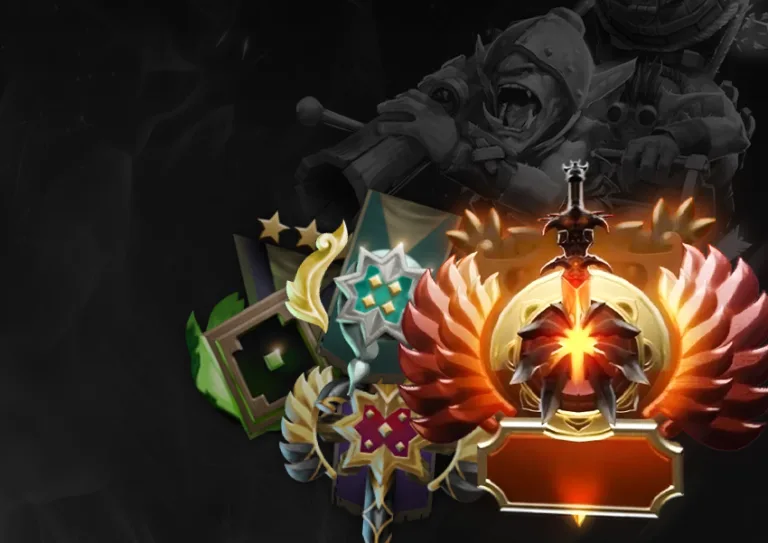
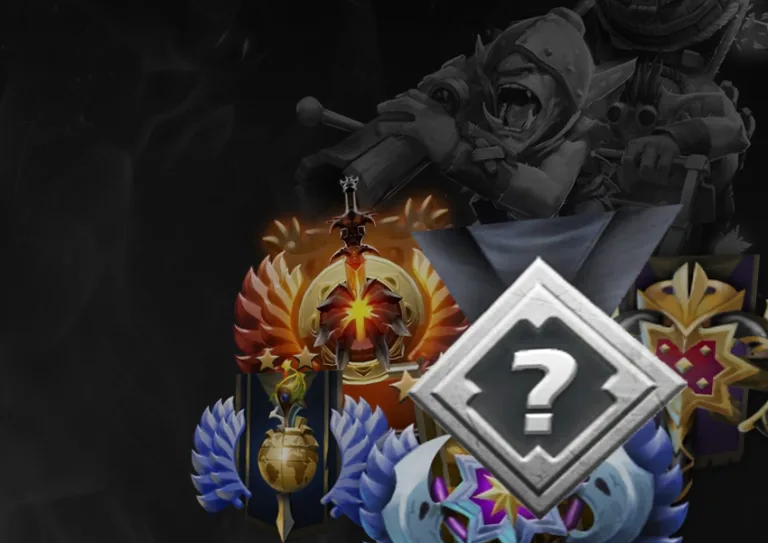
Dota 2 Behavior Score System
Dota 2 is a team game. Your behavior not only affects your personal experience but also the experience of other players.
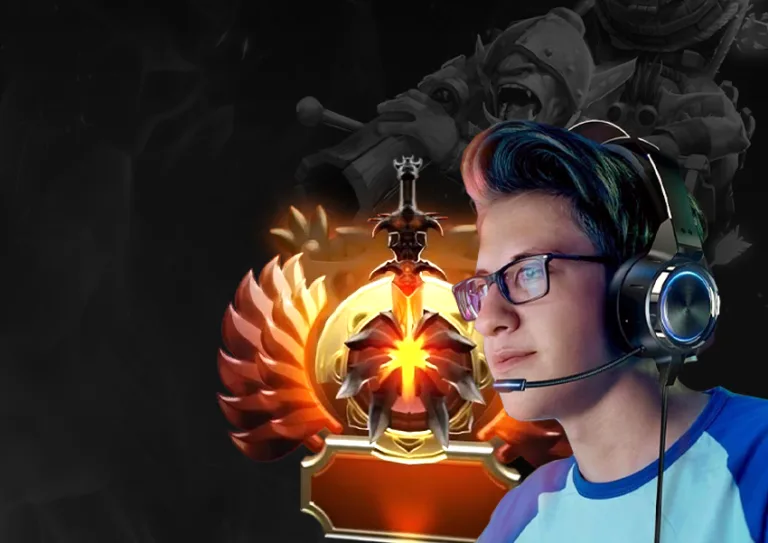
Imagine you've arrived at a party. Some people are having fun and creating a great atmosphere, while others are ruining it with their behavior. The behavior system in Dota 2 works like a bouncer at this party, helping to separate pleasant teammates from toxic players. Other players evaluate your gameplay, adherence to norms, and rules. This is how your reputation in Dota 2 is formed.
Not only does it make your games more enjoyable, but it also motivates the community to be better, creating a healthy and friendly atmosphere in the game.
What is behavior in Dota 2?
The behavior system in Dota 2 is a mechanism for evaluating player behavior, introduced by Valve to create a more pleasant and healthy gaming environment. It didn’t appear immediately with the game’s release, but in 2013, when the developers realized the need to combat toxicity within the community.
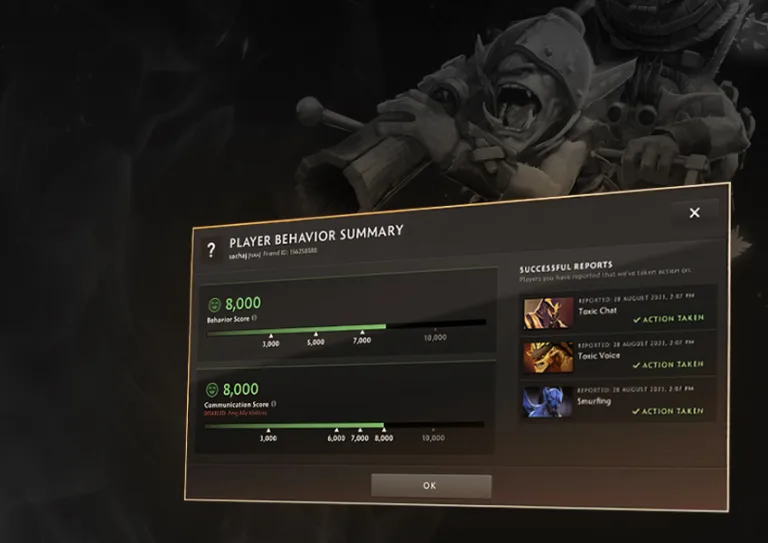
The system is simple: every player has a behavior score that changes depending on their in-game behavior. This score affects the quality of matchmaking and access to certain game features.
How is behavior determined in Dota?
After every ten matches (and sometimes earlier if you end up in low priority), you receive a sort of “progress report.” In it, you’ll see how many times you left the game early, as well as how many commendations and reports you’ve received in the last 25 games. Interestingly, the system takes into account not only the number of reports but also how many different groups of players they came from. Yes, even one person can be considered a group in this case.
Now, for the most interesting part — your behavior score. Imagine a scale from 0 to 10,000. This represents your reputation in the world of Dota 2. Behavior works as follows: the closer you are to zero, the higher the chances you’ll play with unpleasant teammates. But if your score is nearing 10,000, consider yourself a member of Dota 2’s high society. Here, you’ll find players who, like you, are focused on winning and enjoying the game.
How does politeness affect behavior in Dota 2?
An important aspect of the game, which often stays in the shadows of strategy discussions and meta-game, is politeness. This element of player behavior significantly affects the atmosphere of matches and how overall behavior is determined in Dota 2.
In the context of Dota 2, politeness manifests in various ways:
Communication
Clear and respectful communication with the team, constructive suggestions for strategy, timely notifications about enemy movements, and supporting allies.
Attitude towards newcomers
In every match, you may encounter players of different skill levels. It’s important to remain patient with less experienced players and be willing to share knowledge.
Sportsmanship
Recognizing the opponent’s merits, proper behavior in victory, and gracefully accepting defeat — all are signs of a mature player who respects the Dota 2 community.
Using in-game mechanics
Politeness is also shown in how you use in-game communication tools. Excessive pinging or abuse of voice chat often irritates allies. Your overall value in Dota 2 is based on this parameter.
How does the behavior system work?
Behavior in Dota 2 is a dynamic mechanism. It’s not designed to punish but to motivate players towards positive behavior. Many factors influence the improvement of behavior in Dota 2.
How to improve behavior in Dota?
First, determine your competitive rank. Calibration in Dota 2 is the process that defines the initial level of a player in ranked matches.
You should also regularly participate in games without breaking rules, receive commendations from other players, and maintain positive communication in both chat and voice. The absence of reports on your behavior is also essential for maintaining a high score. Through constant teamwork and quality communication, you can achieve maximum behavior score in Dota 2.
On the other hand, the score can drop due to reports from other players, leaving games early, or using offensive language in chat. Intentional gameplay sabotage, such as feeding or item destruction, also negatively impacts your behavior score.
Lowering your behavior score comes with a number of unpleasant consequences. Players may face restricted access to high-ranked games and increased matchmaking wait times. In some cases, players may end up in the low priority pool or face restrictions on chat and voice communication. Additionally, players with low behavior scores may lose access to certain in-game events.
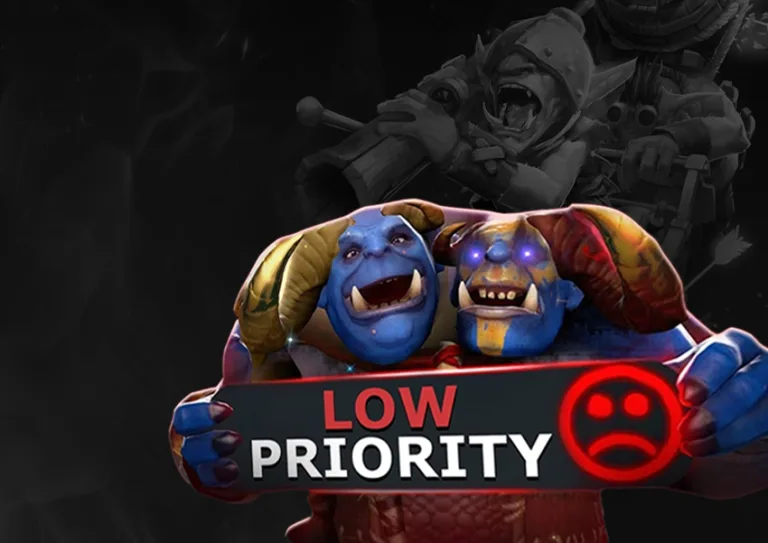
Sometimes players may find themselves in a situation where their behavior lands them in what’s known as "low priority" (LP). This is a form of punishment for rule violations or frequent match abandonment. Getting out of LP is tough, but possible. To do so, you need to play a certain number of matches in a special mode, demonstrating good behavior and teamwork.
How to check your behavior score in Dota?
In Dota 2, behavior is not just a number. This metric reflects your in-game behavior and affects the quality of your matches. Checking it is quite simple. You just need to open your in-game profile and find the section with your behavior score. Here, you’ll see a number between 0 and 10,000 — that’s your current behavior level.
And when does behavior get updated in Dota?
The system recalculates the behavior score after every 15 games or upon receiving a report of rule violations. However, the visual update of the score in your profile doesn’t happen instantly; there’s usually a delay, typically once a day or even less frequently.
If you notice that your score has dropped significantly, don’t panic. This is an opportunity to reflect on your behavior in the game and consider how you can improve it. Remember that every match is a chance to show your best side, both in terms of gameplay skills and in your attitude towards other players.
Lesen Sie auch


WoW Patch 12.0.5 – Hauptmerkmale, Klassenänderungen und was zu erwarten ist
WoW Patch 12.0.5 bringt Leerenangriffe, das Leerenformungssystem, Klassenänderungen und neue Aktivitäten. Erfahre, wie dieses World of Warcraft-Update die Ausrüstung, das Gameplay und die Meta verändert.

Dota 2 Patch 7.41: Warum Valve Aspekte entfernt hat und was das für das Spiel bedeutet
Dota 2 Patch 7.41 entfernt Aspekte, verändert das Gleichgewicht der Helden, das Drafting und den Spielfluss. Erfahre, was sich geändert hat, warum Valve es getan hat und wie das neue Dota 2 Meta funktioniert.

Fortnite Cheat-Codes & Konsolenbefehle (2026): Was tatsächlich funktioniert
Suchst du nach Fortnite-Cheatcodes im Jahr 2026? Erfahre, welche Codes tatsächlich funktionieren, wie du sie einlösen kannst, wo du legitime Fortnite-Codes findest und wie du Betrug und gefälschte Cheats vermeidest.

Miks Valorant Guide — Alle Fähigkeiten, Rolle, Beste Teamkollegen und Wie man spielt
Miks ist Valorants 30. Agent und der erste Controller, der heilen kann. Hier ist eine vollständige Übersicht über jede Fähigkeit, wann man welchen Modus verwendet und wie man das Beste aus ihm im Ranglistenspiel herausholt.
Dota 2 Patch 7.41 — Alle neuen Gegenstände, neutralen Gegenstände und Tier-Liste
Patch 7.41 hat 9 neue Shop-Items und 8 neutrale Items zu Dota 2 hinzugefügt. Hier ist, was jedes Item macht, wer es kaufen sollte und welche neutralen Items es wirklich wert sind, aufgehoben zu werden.
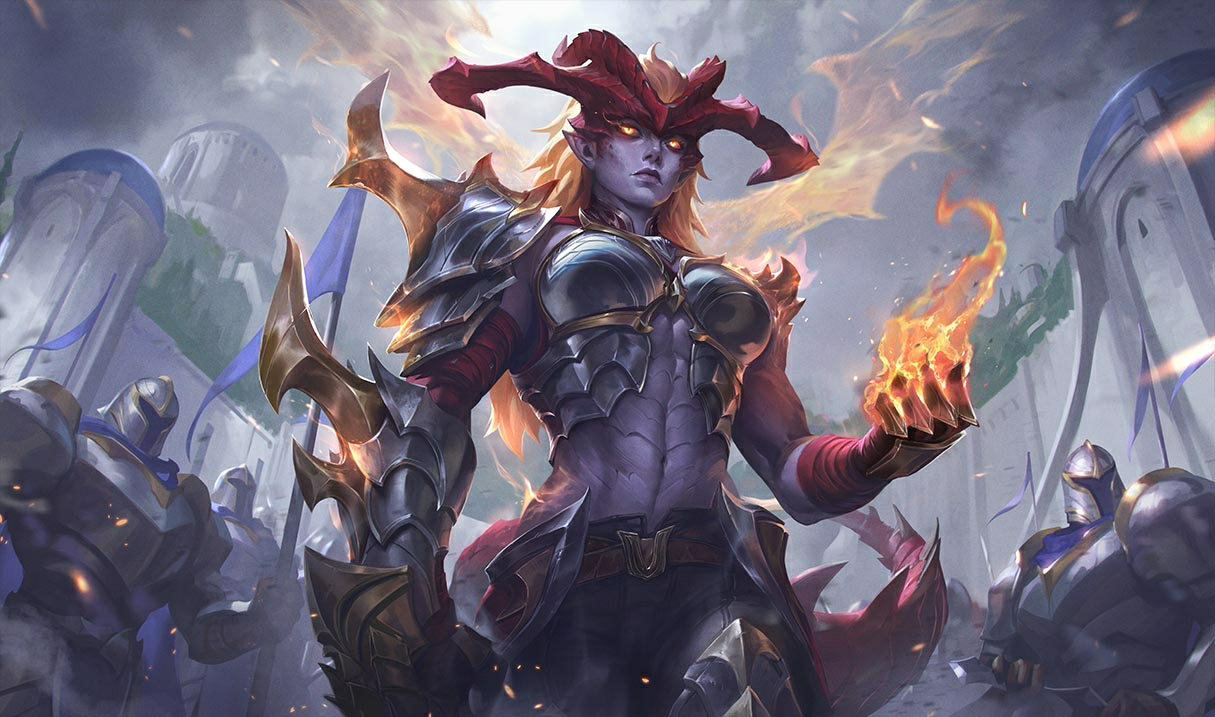

Shyvana-Überarbeitung 2026 — Neue Fähigkeiten, Beste Builds, Skins und Meta-Einfluss
Shyvanas VGU ist endlich in Patch 26.6 angekommen. Neues Kit, neuer Look, neue Drachenform, die sich tatsächlich wie ein Drache anfühlt.



Kommentare zum Artikel
Твари
Kommentar hinterlassen