


 Bewertung-Boost


 Spielwährung


 Perplexity
 ChatGPT
 Grok
Grok
 Claude
 Post on Reddit
Fortnite Ranks Explained: Order, Points System, and How to Rank Up Faster
If you have ever felt like one good match barely moved your Fortnite rank, then one messy drop wiped out progress, you are not imagining it. Ranked Fortnite has its own logic, and once you understand what the game is actually rewarding, climbing ranks in Fortnite stops feeling random.
This guide breaks down how the Fortnite ranked ladder is structured, why some lobbies suddenly feel sharper, and what changes in 2026 are pushing players towards smarter, more complete matches. You will also see how Battle Royale Fortnite ranks and Zero Build Fortnite ranks differently, so you can choose the mode that matches your strengths instead of fighting the system.
Quick Overview: How Fortnite Ranked Works
Fortnite Ranked is not about highlight clips, it is about how you play full matches over time. Your visible Fortnite rank badge is only what you see, while the game is also tracking your skill through Fortnite MMR, which is why lobbies can feel tougher than your tier suggests in the Fortnite ranking system.
Progress in Fortnite ranked matches usually comes from clean, repeatable games: early rotations, controlled fights, and staying alive long enough for decisions to matter in Fortnite. If you regularly reach late circles and avoid wasting resources early, Fortnite ranked matchmaking reads that as stable improvement, which is exactly what Fortnite competitive tends to reward.
It also matters that Battle Royale Fortnite ranks and Zero Build Fortnite ranks are tracked separately, so you can climb one ladder without moving the other in Fortnite Ranked. At the start of a season, ranks tighten, but it is not a full reset, it is more like a quick recheck so the system can place you properly.
How Ranked Matches Differ from Casual
Casual matches are a mixed bag: some players are experimenting, some are chilling, and some are just chasing fights. In Fortnite Ranked, people play with consequences in mind, so you see fewer pointless pushes, more patience, and a bigger focus on position and timing in Fortnite. Early game is still dangerous, but it is more organised. Stronger players pick drops that let them build a match, and they will often disengage from messy fights rather than force a long scrap that invites a third party in Fortnite ranked matches.
Battle Royale vs Zero Build
Both modes use the same ranked idea, but they reward different habits. One lets you build your own safety. The other forces you to earn it with positioning, timing, and clean aim. If you pick the mode that matches how you naturally play, ranking up feels smoother instead of stressful.
Which Should You Play?
Choose Battle Royale if you want the highest skill ceiling and you are happy practising builds and edits.
Choose Zero Build if your strength is aim and decision making, and you want ranked to feel closer to a tactical shooter.
If you are unsure, play 10 ranked matches in each mode and compare: which one gives you more consistent top placements without feeling like you are forcing it.
Fortnite Rank Tiers Explained
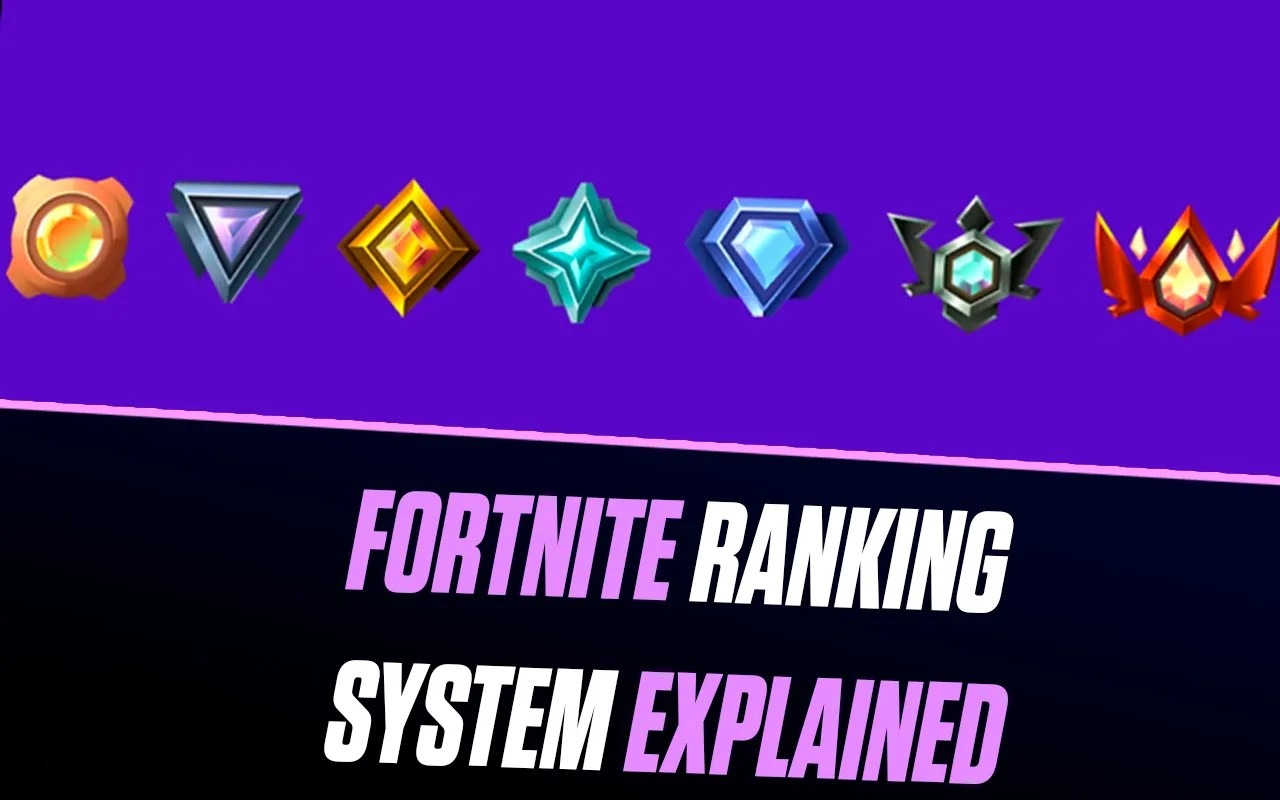
Fortnite’s ranked ladder is split into eight main ranks, but each one has its own “feel” in real matches, especially in Fortnite Ranked. Some tiers are chaotic because the skill range is wide, and Fortnite ranked matchmaking can pull together players with very different decision making. Others are tight because nearly everyone knows what they are doing in Fortnite competitive, and a single mistake gets punished instantly.
Below is what each rank usually looks like in 2026, how the tiers are structured, and why players typically get stuck at certain points in the Fortnite ranking system.
Bronze (3 Tiers)
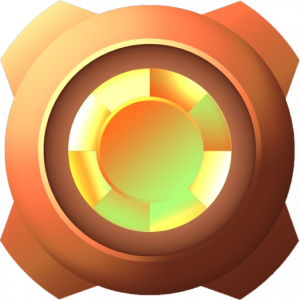
Bronze is where ranked starts, and you will feel the lobby swing a lot because everyone is there for different reasons. Some players are genuinely new to competitive, others are simply climbing back after the seasonal reset.
Tiers:
Bronze I.
Bronze II.
Bronze III.
What Bronze Usually Looks Like: You will see shaky rotations, panic builds, and loadouts that do not really match the situation. One match can feel free, the next can feel like you got landed on by a smurf, which is why consistency matters more than “pop off” games here.
How To Get Out Of Bronze:
Play for top 10 finishes first, then add eliminations when the fight is clean.
Learn a simple, repeatable build pattern for defence, even if it is just quick boxing.
Pick drop spots you can repeat and memorise, so your early game stops being random.
Avoid hot drops until you are confident winning the first fight fast.
Population From The Example:
Around 21% of ranked players.
Silver (3 Tiers)

Silver is the most crowded division, so it can feel like a traffic jam. Players here understand the basics, but they make the same few mistakes often enough to keep them stuck.
Tiers:
Silver I.
Silver II.
Silver III.
What Separates Silver From The Next Step: Silver players can build and edit, but they hesitate. They can fight, but they do not always manage materials well. They also rotate a bit late, so they arrive to zone under pressure instead of arriving with control.
Small Fixes That Change Everything In Silver:
Stop running out of mats mid fight, because it happens constantly at this tier.
Make edits with a plan, not to show speed.
Rotate earlier so you are not forced through open lines in the last seconds.
Population From The Example:
Around 30% of ranked players, the biggest share.
Silver I is highlighted as the single most common rank.
Gold (3 Tiers)

Gold is where ranked starts to feel serious. Players are more consistent, and the lobby punishes mistakes quicker. If you play sloppy, you will not get many “second chances” the way you sometimes do in Silver.
Tiers:
Gold I.
Gold II.
Gold III.
What Gold Feels Like: Fights are cleaner, third parties happen more often, and you cannot ignore zone timing anymore. You can still climb with good mechanics, but game sense begins to matter just as much.
Why Players Stall In Gold:
The jump into Platinum is noticeable, so many players hover in Gold II and Gold III.
Longer fights get crashed fast, so you need to either finish or disengage.
Late rotates start to cost you matches, even if your aim is decent.
Population From The Example:
Around 23% of ranked players.
Platinum (3 Tiers)

Platinum is the point where you can assume most players are mechanically capable. People box fight properly, punish bad peeks, and turn tiny mistakes into full wipes.
Tiers:
Platinum I.
Platinum II.
Platinum III.
What You Need To Keep Climbing:
Faster, cleaner building and editing, including quick resets.
Better loadout decisions, knowing what to prioritise and when to swap.
Stronger endgame understanding, especially when to take space and when to back off.
Why Platinum Hits Hard: You are playing against opponents who do not “gift” you wins. If you rotate late, you pay for it. If you overextend for one kill, someone else cashes in on you.
Population From The Example:
Around 14% of ranked players.
Reaching Platinum is described as being in the top quarter of ranked players.
Diamond (3 Tiers)

Diamond is high level ranked. Players here treat matches like practice for competitive events, and the tempo is ruthless when you make a mistake.
Tiers:
Diamond I.
Diamond II.
Diamond III.
What Diamond Players Do Better:
They edit and reset at speed, without exposing themselves for free damage.
They use utility well, not as panic buttons but as planned outplays.
They avoid pointless fights that drain mats and heals before endgame.
How Diamond Punishes You: If you peek the same angle twice, someone is waiting. If you build messy, you get boxed. If you rotate without a plan, you get tracked and pressured until you break.
Population From The Example:
Around 8% of ranked players.
Diamond I is described as top 13% globally.
Elite (Single Division)
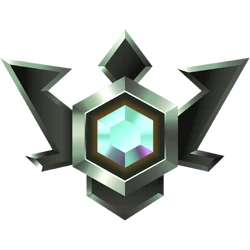
Elite is where the ladder stops being “tiers” and starts being a statement. You are not just having good games, you are having good games consistently, and that is the hardest part.
Division:
Elite is one division, no sub tiers.
What Makes Elite Different: You need to win fights while staying healthy and resource rich, because every endgame is stacked. Smart aggression matters here. W keying everything will burn you, but playing too scared can leave you under geared.
Important Rule From The Example:
Once you reach Elite, you cannot be demoted for the rest of the season.
Population From The Example:
Around 2% of ranked players.
Champion (Single Division)
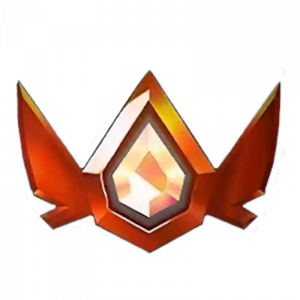
Champion is tournament calibre territory. A lot of players here have FNCS experience, or they play ranked like it is a qualifier.
Division:
Champion is one division, no sub tiers.
What Champion Lobbies Demand:
Reliable top placements in stacked endgames.
Strong mid game rotations that keep you safe without killing your pace.
A clear plan for points style play, not just chasing fights.
Important Rule From The Example:
Like Elite, Champion cannot be lost once earned in a season.
Population From The Example:
Around 1% of ranked players.
Unreal (Single Division)
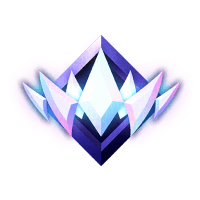
Unreal is the top of the mountain. It is not a “good week” rank, it is a “you live here” rank. These lobbies are full of players who know every mechanic, every timing window, and every way to punish a mistake.
Division:
Unreal is one division, the highest rank.
What It Takes In Practice: You need complete control: mechanics, rotations, endgame decisions, and meta awareness. Most Unreal players have huge competitive hours, and they do not let you play comfortably.
Important Notes From The Example:
Unreal is locked for the season once achieved.
It is tied to competitive deadlines for certain events like the Unreal Cup in the example.
Population From The Example:
Below 0.5% of ranked players.
Ranked 2.0: What’s New in 2026
Ranked in 2026 is clearly moving away from the old idea that the loudest player in the lobby automatically deserves the most progress in Fortnite Ranked. Fortnite Ranked 2.0 is Epic’s push towards measuring the whole match: how you contribute, how you survive, and how you handle the parts of the game that usually decide wins, not just the first five minutes of chaos in Fortnite.
The result is a system that feels stricter, but also fairer for climbing in Fortnite competitive. If you are the type of player who plays smart, rotates cleanly, and takes fights you can finish, you will notice the game rewarding that style more consistently through Fortnite ranked matchmaking and the Fortnite ranking system.
Performance-Based Progression
The big change is that match quality matters more than “how many did you drop”. Eliminations still help, but they are no longer the only story the system listens to. What Ranked 2.0 leans on more heavily:
Damage dealt: Being the player who actually wins the trade, not the one who tags once and disappears.
Survival time: Staying alive long enough to reach the parts of the match where decisions matter.
Placement: Deep runs and top finishes carry more weight across consistent sessions.
Team contribution in duos and trios: Assists, pressure, and support plays count in practice, even when you are not the finisher.
Zone and objective control: Rotating well, holding strong space, and not throwing your position for no reason.
Hidden MMR Adjustments
Hidden MMR has existed, but the 2026 direction puts more trust in it to keep matchmaking honest. Think of it as the game’s memory of how good you actually are, even when your visible rank is still catching up. What it is trying to fix:
Smurf pressure in lower ranks: Strong players do not get endless easy lobbies just because their badge is low.
Comeback accuracy after breaks: Returning players get pushed towards their real level faster.
Rank inflation problems: The ladder stays more stable across the season instead of drifting wildly.
What you notice in matches:
If you are outperforming your current tier, your lobbies get sharper, but your climb speeds up when you keep delivering.
If you are underperforming, the games may feel a bit easier, yet the progress per match can feel smaller until you stabilise.
Competitive Division System
Ranked 2.0 also connects more clearly to the competitive path, especially with FNCS 2026 shifting to a division based structure. How the competitive ladder is described in the example:
Players start through FNCS Trial to get placed into divisions.
Division 1 becomes the gate for entering FNCS Major tournaments.
Divisional Cups replace older qualification routes, creating a clearer step by step climb.
Strategies for Climbing Ranks Faster
Climbing in Fortnite Ranked in 2026 is about repeatable matches, not “easy rank” tricks. The players who move up fastest are the ones who keep games controlled: land with a plan, take fights you can finish quickly, and rotate early so you are not crossing bad angles with no cover in Fortnite ranked matches.
To make progress in the Fortnite ranking system feel consistent, build your match in phases. Use early game to secure loot and a safe route, use mid game to avoid long chases and unnecessary noise, then arrive to endgame with materials, heals, and mobility ready. In Fortnite competitive, those resources are what let you survive the crowded late circles where percentage is usually earned.
Team consistency also speeds everything up. Solo queue in Fortnite Ranked works, but coordinated duos or trios create calmer games because your rotates and fights are synced. If you play solo, keep one style you can repeat and let Fortnite ranked matchmaking reward your consistency over time.
Conclusion
Fortnite Ranked in 2026 rewards players who can put together complete matches, not just flashy openings. The ladder from Bronze to Unreal is still the same climb, but Fortnite Ranked 2.0 shifts the focus towards smarter decisions, better rotations, and meaningful impact that lasts into late game in Fortnite.
If you pick the mode that fits your strengths, learn what each rank expects, and keep your sessions consistent, ranking up stops feeling like luck and starts feeling like a skill you can actually build through the Fortnite ranking system and Fortnite ranked matchmaking.
Lesen Sie auch


WoW Patch 12.0.5 – Hauptmerkmale, Klassenänderungen und was zu erwarten ist
WoW Patch 12.0.5 bringt Leerenangriffe, das Leerenformungssystem, Klassenänderungen und neue Aktivitäten. Erfahre, wie dieses World of Warcraft-Update die Ausrüstung, das Gameplay und die Meta verändert.

Dota 2 Patch 7.41: Warum Valve Aspekte entfernt hat und was das für das Spiel bedeutet
Dota 2 Patch 7.41 entfernt Aspekte, verändert das Gleichgewicht der Helden, das Drafting und den Spielfluss. Erfahre, was sich geändert hat, warum Valve es getan hat und wie das neue Dota 2 Meta funktioniert.

Fortnite Cheat-Codes & Konsolenbefehle (2026): Was tatsächlich funktioniert
Suchst du nach Fortnite-Cheatcodes im Jahr 2026? Erfahre, welche Codes tatsächlich funktionieren, wie du sie einlösen kannst, wo du legitime Fortnite-Codes findest und wie du Betrug und gefälschte Cheats vermeidest.

Miks Valorant Guide — Alle Fähigkeiten, Rolle, Beste Teamkollegen und Wie man spielt
Miks ist Valorants 30. Agent und der erste Controller, der heilen kann. Hier ist eine vollständige Übersicht über jede Fähigkeit, wann man welchen Modus verwendet und wie man das Beste aus ihm im Ranglistenspiel herausholt.
Dota 2 Patch 7.41 — Alle neuen Gegenstände, neutralen Gegenstände und Tier-Liste
Patch 7.41 hat 9 neue Shop-Items und 8 neutrale Items zu Dota 2 hinzugefügt. Hier ist, was jedes Item macht, wer es kaufen sollte und welche neutralen Items es wirklich wert sind, aufgehoben zu werden.

Shyvana-Überarbeitung 2026 — Neue Fähigkeiten, Beste Builds, Skins und Meta-Einfluss
Shyvanas VGU ist endlich in Patch 26.6 angekommen. Neues Kit, neuer Look, neue Drachenform, die sich tatsächlich wie ein Drache anfühlt.




Kommentare zum Artikel
Noch keine Kommentare. Sei der Erste!
Kommentar hinterlassen