


 Bewertung-Boost


 Spielwährung


 Perplexity
 ChatGPT
 Grok
Grok
 Claude
 Post on Reddit
How to Rank Up in Valorant Faster
Most players don’t stay stuck because they lack aim. They stay stuck because the same mistakes repeat every game, bad peeks, wrong crosshair positioning, unnecessary fights, or inconsistent mechanics. Ranking up in Valorant comes from fixing fundamentals that decide rounds, not from chasing highlight kills.
These Valorant rank up tips focus on real in-game habits used by high-elo players: movement timing, crosshair discipline, angle control, and consistency. If you want to skip long grinding and start playing in stronger lobbies, some players also choose to buy Valorant accounts at competitive prices on platform GoRanked, but long-term climbing still depends on understanding how fights are actually won.
Optimize Your Settings Before Anything Else
Settings won’t carry you, but unstable settings slow improvement more than people realize. If your sensitivity or config changes every week, your muscle memory resets before it ever stabilizes.
Sensitivity and control
A good Valorant sensitivity feels controlled under pressure. In lower ranks, players often use sensitivities that are too high, fast flicks look good, but tracking becomes unstable and micro-adjustments fall apart.
Crosshair and visual clarity
Good crosshair placement starts with visibility. If your crosshair disappears into bright walls or feels visually noisy, your reaction speed drops. High-rank players rely on a clear visual reference so their crosshair naturally stays at head level while moving around the map.
Performance and frame stability
Frame drops change timing. Peeks feel slower, movement becomes unpredictable, and confidence drops without you realizing it. Smooth FPS matters more than high graphics because Valorant rewards consistency, especially when holding angles or reacting to swings.
Core Mechanics That Actually Win Gunfights
Most gunfights are decided before shooting starts. Positioning, movement timing, and crosshair location determine who has the easier shot.
Movement timing vs random strafing
A common low-rank habit is constant AD movement with no purpose. High-elo players move with timing, they change direction when an enemy is likely to fire. The result looks like bullet dodging, but it’s just understanding rhythm. If your movement doesn’t force misses, it’s just extra motion.
Crosshair placement beats reaction speed
Players often blame aim when they lose fights, but the real problem is usually crosshair distance. The farther your crosshair is from the enemy’s head, the more mechanical skill you need to win.
Strong crosshair placement means:
pre-aiming common swing distances
holding slightly off the wall to react to wide peeks
keeping head height consistent while rotating
High-rank players don’t necessarily react faster, they simply start closer to the correct position.
Aim style and individual strengths
Not everyone should aim the same way. Some players win through calm, placement-heavy aim. Others rely on aggressive flicks or movement-based fights. Constantly copying trending aim styles usually makes players worse because they abandon what already works for them.
Movement, Peeking & Angle Advantage
A huge percentage of ranked deaths come from bad peeks, not bad aim. The way you approach angles determines whether a fight is fair or impossible.
Angle advantage explained
In Valorant, the player farther from a corner often sees first. If you hug the wall while peeking, your shoulder appears before your crosshair does, which is why some fights feel unwinnable even when your aim is good. Small positioning changes completely change who gets the first shot.
Peeking structure
Good players don’t clear everything at once. They isolate fights and reduce risk step by step instead of swinging into multiple angles.
Off-angles and repositioning
Standard angles get pre-aimed at higher ranks. Off-angles work because they force enemies to adjust their crosshair mid-peek, giving you first-shot advantage. The mistake most players make: repeating the same off-angle every round. Once enemies expect it, the advantage disappears. Repositioning after contact matters just as much. Shooting twice from the same spot makes you predictable and easy to punish.
Agent Mastery and Role Understanding
A lot of players lock the same agent every game and never learn how roles actually change the way rounds are played. The result: predictable gameplay and limited impact when things go wrong. Ranking up in Valorant becomes easier when you understand roles as tools, not restrictions.
You don’t need to master every agent, but you should be comfortable with several options across roles. This helps when your main gets taken and prevents games where you’re forced onto something unfamiliar.
Build a realistic agent pool
Instead of one-tricking, high-elo players usually keep a small but flexible pool:
one comfort pick (your strongest agent)
one fallback agent for another role
one agent that fits common team needs (controller or initiator)
This improves team balance and increases win consistency in ranked.
Role doesn’t define playstyle
Agents don’t decide whether you frag, your decisions do. A Sage can take aggressive off-angles. An Omen can create space like a duelist. Good players use utility to create better gunfights, not to avoid them. Think of utility as a way to make fights easier:
smoke to isolate 1v1 fights
flashes to force bad enemy timing
sentinel setups to control space before the duel happens
Players who rank up faster understand that every role still requires strong mechanics and confidence in duels.
Adapt to enemy composition
Agent mastery also means recognizing what the enemy lacks. Examples:
no sentinel → lurks become stronger
no info agent → corners and off-angles gain value
weak entry utility → aggressive defense becomes safer
High-rank players constantly adjust their play based on enemy composition instead of repeating the same habits every match.
Communication & Learning to IGL
You don’t need to be the full in-game leader to increase your win rate. Small, clear calls already separate climbing players from stuck ones.
Most ranked games are lost because players react late or don’t share information quickly enough.
What good communication actually looks like
Good comms are short and actionable:
enemy positions
utility used
timing info (“two rotating mid”)
simple plans (“wait for my flash”)
Long explanations mid-round usually create confusion. Clear information wins rounds.
Calling utility wins fights
Even duelists should call for support. Asking for a flash or smoke before peeking turns risky fights into favorable ones. Controllers and initiators especially need to communicate because their utility only creates value when teammates are ready to use it.
Small IGL habits that increase win rate
You don’t need to control the whole team. Simple decisions help:
suggesting slower or faster pacing
calling rotates early
deciding when to save or fight
Players who communicate calmly create structure in chaotic ranked games, and structure wins more rounds than pure aim.
Game Sense, Lurking & Decision Making
Game sense isn’t magic. It’s pattern recognition built from understanding how players react under pressure.
Real lurking isn’t just going late
Many players think lurking means sitting on the opposite side of the map doing nothing. Good lurking is about timing. When your team pressures one site, defenders usually do one of two things:
rotate
push for information
A good lurk punishes whichever reaction happens first. Examples:
team pressures A → catch rotating player mid
defenders push for info → punish the push and create a numbers advantage
If nothing happens, no rotation, no push, stop lurking and regroup. Staying isolated without impact loses rounds.
Information wins more rounds than kills
Sometimes the best play isn’t fighting, it’s gathering info and surviving. Early information allows your team to rotate faster and set up better fights.
Ranked Mentality & Climbing Faster
Mechanics help you win rounds. Mentality helps you win long sessions. Ranking up in Valorant is about long-term consistency. Some matches are unwinnable. Others are free wins. What matters is your average impact across many games. Players who improve faster focus on:
reducing bad deaths
making fewer repeat mistakes
staying consistent even after losses
Tilt destroys decision-making
When players tilt, they peek faster, communicate less, and take worse fights. Even strong mechanics collapse under frustration. The simplest fix: recognize when your decision-making changes. If you start forcing plays or blaming teammates, performance is already dropping.
Solo queue vs playing with others
Solo queue is unpredictable. Playing with one reliable teammate improves coordination, trades, and communication without requiring a full stack. Climbing becomes easier when at least one player understands your timing and decisions.
Conclusion
Ranking up in Valorant isn’t about finding one secret trick. It’s a combination of small advantages, stable settings, better movement, smarter peeks, clear communication, and consistent decision-making.
Players who climb faster don’t necessarily have better aim. They make fights easier for themselves before the shooting starts. They understand roles, use utility to create advantages, and avoid repeating the same mistakes every game.
Focus on fundamentals, play with intention, and improve one layer at a time. That’s how ranks start moving, and once the basics become automatic, climbing stops feeling like a grind and starts feeling predictable.
Lesen Sie auch


WoW Patch 12.0.5 – Hauptmerkmale, Klassenänderungen und was zu erwarten ist
WoW Patch 12.0.5 bringt Leerenangriffe, das Leerenformungssystem, Klassenänderungen und neue Aktivitäten. Erfahre, wie dieses World of Warcraft-Update die Ausrüstung, das Gameplay und die Meta verändert.

Dota 2 Patch 7.41: Warum Valve Aspekte entfernt hat und was das für das Spiel bedeutet
Dota 2 Patch 7.41 entfernt Aspekte, verändert das Gleichgewicht der Helden, das Drafting und den Spielfluss. Erfahre, was sich geändert hat, warum Valve es getan hat und wie das neue Dota 2 Meta funktioniert.

Fortnite Cheat-Codes & Konsolenbefehle (2026): Was tatsächlich funktioniert
Suchst du nach Fortnite-Cheatcodes im Jahr 2026? Erfahre, welche Codes tatsächlich funktionieren, wie du sie einlösen kannst, wo du legitime Fortnite-Codes findest und wie du Betrug und gefälschte Cheats vermeidest.
Miks Valorant Guide — Alle Fähigkeiten, Rolle, Beste Teamkollegen und Wie man spielt
Miks ist Valorants 30. Agent und der erste Controller, der heilen kann. Hier ist eine vollständige Übersicht über jede Fähigkeit, wann man welchen Modus verwendet und wie man das Beste aus ihm im Ranglistenspiel herausholt.
Dota 2 Patch 7.41 — Alle neuen Gegenstände, neutralen Gegenstände und Tier-Liste
Patch 7.41 hat 9 neue Shop-Items und 8 neutrale Items zu Dota 2 hinzugefügt. Hier ist, was jedes Item macht, wer es kaufen sollte und welche neutralen Items es wirklich wert sind, aufgehoben zu werden.
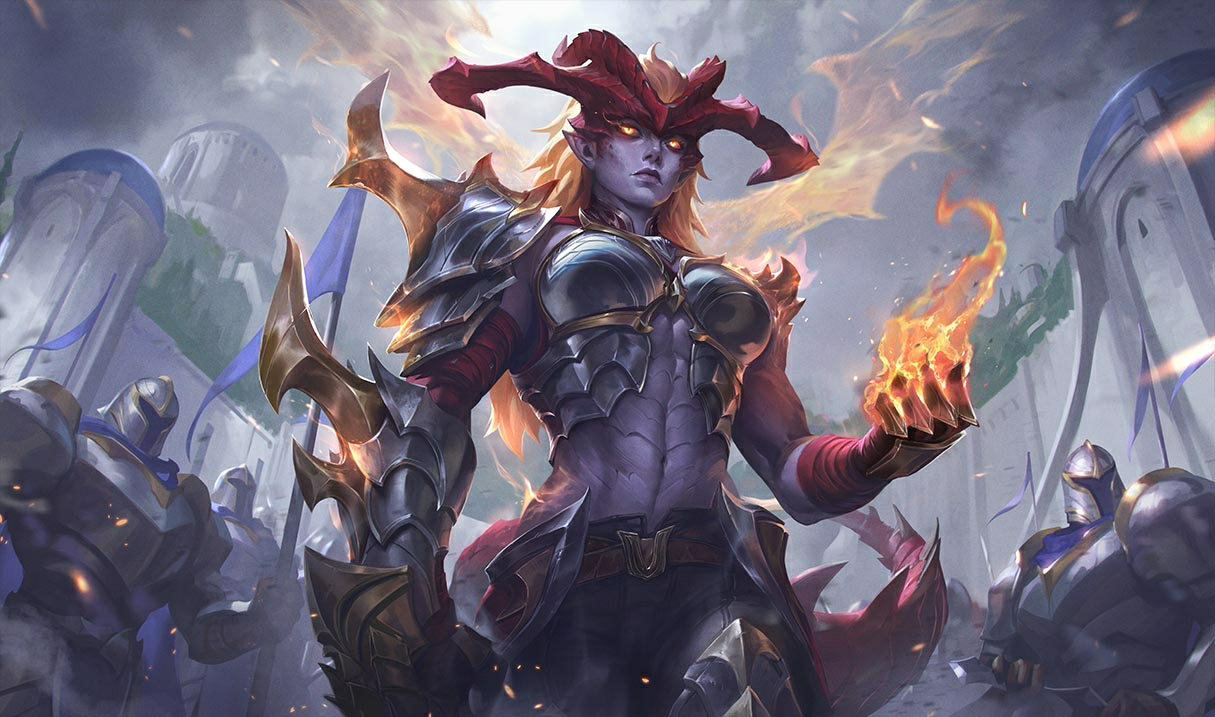

Shyvana-Überarbeitung 2026 — Neue Fähigkeiten, Beste Builds, Skins und Meta-Einfluss
Shyvanas VGU ist endlich in Patch 26.6 angekommen. Neues Kit, neuer Look, neue Drachenform, die sich tatsächlich wie ein Drache anfühlt.


Kommentare zum Artikel
Noch keine Kommentare. Sei der Erste!
Kommentar hinterlassen